How to Prepare for Junk Removal: A Step-by-Step Checklist
How to Prepare for Junk Removal: A Step-by-Step Checklist
The best preparation for junk removal is a short one: decide what goes, pull out anything that has a better destination than a truck, deal with hazardous items separately, and make the path from the item to the curb clear. Do those four things and the crew spends its time loading instead of waiting, which keeps the job quick and the price predictable. If you live in Naples, Bonita Springs, Estero or elsewhere in Lee and Collier counties, our junk removal and hauling service starts from $99, and the checklist below is how we would tell a friend to get ready for it.
TL;DR
- Mark what leaves and what stays before anyone arrives, then pull out valuables, donations and paperwork.
- Keep paint, pool chemicals, batteries and similar items out of the pile: they are household hazardous waste and follow separate rules.
- Clear a walkable path, open gates and doors, and tell the crew where to park.
- Take photos of the area beforehand, and give a clear item list or photos when you ask for a quote.
- A single couch and a full garage cleanout need different prep: the first is about access, the second is about sorting in stages.
Table of Contents
- Step 1: Decide what goes and what stays
- Step 2: Pull out anything with a better destination
- Step 3: Handle hazardous and restricted items separately
- Step 4: Clear the path and set up access
- Step 5: Brief the crew and confirm the details
- Single item or full cleanout: how prep differs
- A short list for the day before
- Why we recommend a pro for the heavy part
- Book your pickup
- FAQ
- Sources
Step 1: Decide what goes and what stays
The slowest part of any pickup is a customer standing in a room asking “do we keep this?” Make the decisions before the crew arrives, and make them visible.
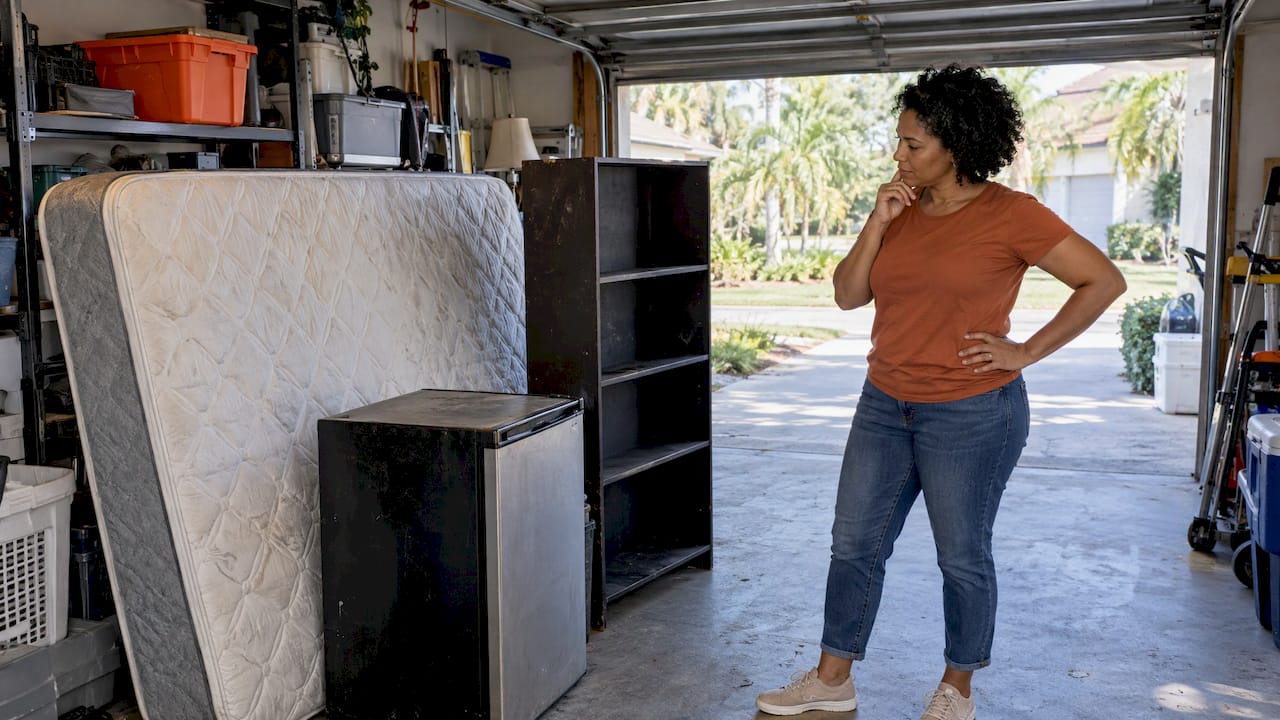
Start with a walkthrough and a rough list of the big items: sofa, mattress, treadmill, shelving, old appliances. A list also helps when you ask for a quote, because the size of the load is what drives the price. Our own guide to what determines junk removal cost explains the charges that add up, so you know what a list or a photo changes.
If you struggle to let things go, use a scoring trick. Organizer Joanna Wirick, quoted in Good Housekeeping, suggests giving each item a value from 1 to 10 for you. Anything below a five is probably worth more to someone else than to you. It works because it replaces guilt with a number.
Then mark things physically:
- Use painter’s tape or sticky notes on large items that are leaving.
- Group everything leaving in one area of the garage, room or lanai when you can.
- Put a note or a piece of tape on anything that looks like junk but stays, such as a shelf you are keeping or a box of tools.
In a house with several people, this is where mistakes happen. Agree on the list with everyone who lives there, and tell them the date. A snowbird’s spouse who forgot the plan is the usual reason a good chair ends up on the truck.
Step 2: Pull out anything with a better destination
Not everything you are clearing belongs in a landfill, and a quick sort can save you money and feel better. Hennepin County’s reuse guide says the most environmentally friendly way to get rid of a good item is to sell, give away, donate or repair it. The same guide advises calling a charity first to confirm what it accepts and its drop-off or pickup rules.
A simple way to organize this is to sort into labeled boxes or zones, each with one destination:
| Pile | What goes in it | Before pickup day |
|---|---|---|
| Keep | Anything staying in the home | Move it out of the work area |
| Sell | Items worth your time to list | Photograph and list, or decide to donate |
| Donate | Clean furniture, housewares, working appliances | Confirm what the charity accepts |
| Special disposal | Paint, chemicals, batteries, electronics | Separate and store safely |
| Haul away | Everything else | Group, tag, clear the path |
Be strict about the sell pile. Professional organizer Mary Andrews suggests setting a threshold, such as only selling things that would bring $50 or $100 or more. Below that, listing, answering messages and meeting buyers costs more than the money is worth, and the item sits in your garage for another season.
For furniture in good shape, we also offer furniture donation pickup across Southwest Florida, and our guide to where to donate furniture in Naples lists local options. Sorting donations out first means they go where they will be reused, and your junk load gets smaller.
Finally, pull out what must not be thrown away by accident: documents, jewelry, medications, keys, photos, laptops and phones, and anything with personal data. In a cleanout of a parent’s home or a rental, walk every drawer and every closet shelf yourself before the job.
Step 3: Handle hazardous and restricted items separately
This is the step that most often trips people up. Junk haulers and curbside trash service generally cannot take everything, and some things are regulated for good reasons.
The EPA says some paints, cleaners, oils, batteries and pesticides can be household hazardous waste, and recommends searching by zip code or contacting a local environmental, health or solid waste agency for collection. The EPA also explains that household hazardous waste is regulated as solid waste under state and local rules, so the details depend on where you live.
In Collier County, the Hazardous Materials Collection Center at 3728 White Lake Boulevard in Naples takes household hazardous waste and electronics. Its listed hours are Monday to Saturday, 8:30 a.m. to 4:30 p.m. Hours and accepted items can change, so check the county page before you drive over. Lee County residents should check Lee County Solid Waste for their own drop-off options.
Typical items to set aside for that kind of collection:
- Oil-based paint, thinners and stains
- Pool chemicals and pesticides, common in Florida garages and lanai storage
- Gasoline, motor oil, antifreeze and brake fluid
- Batteries of all kinds, including from lawn equipment and tools
- Drain cleaners and strong household cleaners
Keep them in original containers or in sealed, leakproof ones. Never mix chemicals. Store them away from the pile heading to the truck, ideally in a labeled bin, so nobody loads them by mistake.
Appliances, fridges and microwaves
Large appliances need a little prep. Howard County, Maryland, notes that working appliances should be reused or donated first. The same page says air conditioners, dehumidifiers and refrigerators contain refrigerant (Freon) that must be removed by a qualified process, and that batteries should be taken out of lawn equipment and other battery-operated devices before disposal.
What that means for you in practice:
- Empty and defrost the fridge or freezer a day ahead. Prop the doors open so nothing grows inside.
- Unplug and disconnect water lines on washers, dishwashers and ice makers.
- Remove batteries from tools, mowers and gadgets.
- Tape or tie loose parts, cords and doors so they do not swing open on the stairs.
We cover the rules in more detail in our guides to refrigerator disposal for Southwest Florida homeowners, mattress recycling and disposing of microwave ovens safely in Florida. If a fridge is sitting in a hot garage and has to move first, the 45 degree tilt rule is worth reading.
Step 4: Clear the path and set up access
The crew’s job is to carry things from where they sit to the truck. Every obstacle on that route adds time and risk, so walk it yourself the day before.
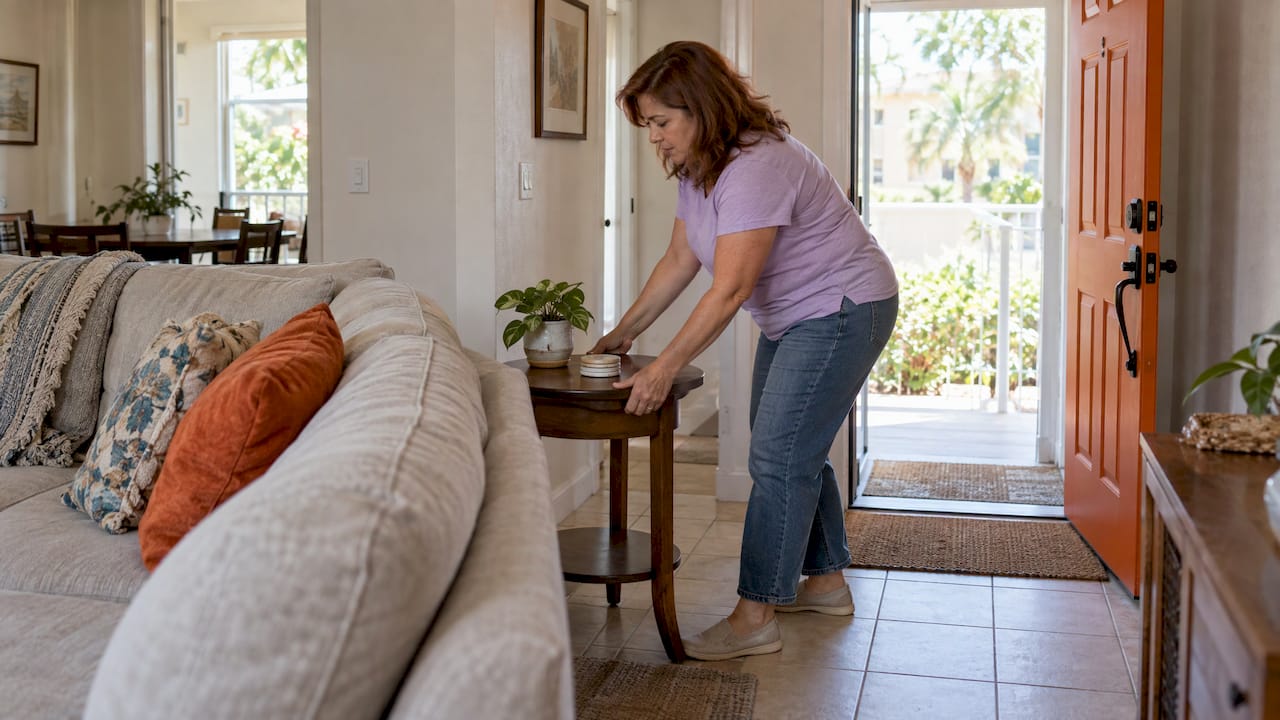
- Clear the route. Move boxes, rugs, pet gates, potted plants and low furniture out of hallways and doorways. Check that nothing blocks the garage door or the lanai slider.
- Open what needs opening. Unlock gates, side doors and storage rooms, and leave the garage code or key arrangements clear in your booking notes.
- Plan the parking. Save a spot close to the door or driveway. In a community with a gate or guard, put the visit on the guest list and tell the crew the gate code or the name to give.
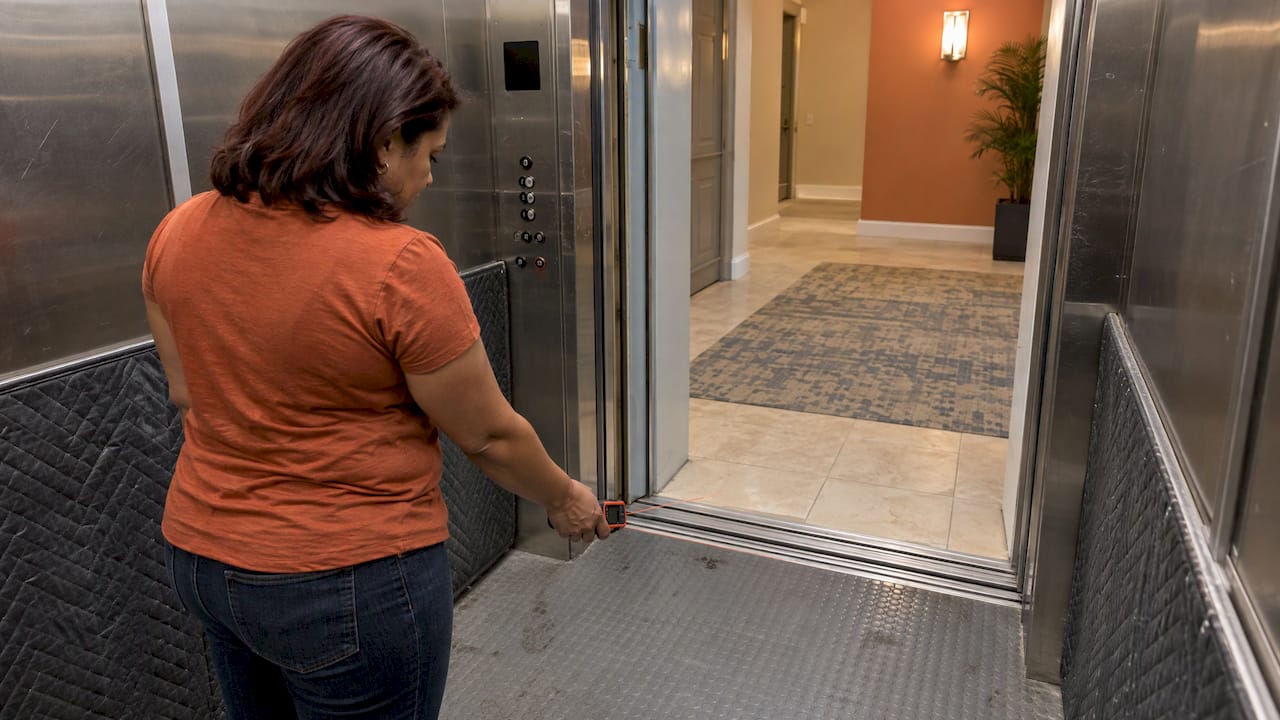
- Check condo and HOA rules. Many buildings require you to reserve the elevator or loading area, and some require notice for contractor access or limit hours. Ask the management office before pickup day, not on it.
- Protect what stays. Tape up or cover fragile finishes, and move artwork and family pieces to a closed room.
- Secure pets and children. A dog at the door slows everything down and is a safety issue when large items are moving.
Take photos of the area before anything is moved. It records what was there and what condition the floors and walls were in. For a rental owner or a property manager, it is also a simple record for the file.
Step 5: Brief the crew and confirm the details
A good booking saves time at the door. When you call or message, give:
- The address and the exact spot where the items are (garage, lanai, second floor, storage unit)
- A list or photos of the big items, and a note about anything heavy, such as a safe, a piano or a hot tub
- Stairs, narrow doors, tight turns or long carries
- What is staying, if the room is not fully empty
- Whether anything is hazardous or unusual
- The time window that works for you
Small jobs often do not need you standing there the whole time, but you should be reachable by phone for the walkthrough, a price confirmation and any decision about borderline items. On a larger job, be present at the start to point out what goes, and agree on the price before loading begins. Ask your provider how they handle access and payment if you are away, and put it in writing in your booking message.
At Fix Move Haul, you deal with a Southwest Florida owner-operator directly for quotes and scheduling, without dispatchers or callback chains, and same-day service is an option for many jobs. That makes the briefing simple: the person you describe the job to is the person who knows what you asked for.
Single item or full cleanout: how prep differs
One or two large items
For a couch, a mattress, an old grill or a treadmill, the prep is mostly access. Measure the item and the door. Take off removable parts such as cushions, legs and glass shelves. Make sure the path is clear, and bring up anything the item is blocking. Take a photo and send it with your request.
Garage, estate or property cleanout
A full-property job is a project, not a pickup. Plan it in stages:
- A week or more ahead: walk each room, make your keep, sell, donate and haul decisions, and pull out paperwork and valuables.
- Several days ahead: deal with hazardous items, drain and defrost appliances, and arrange donation pickups.
- The day before: clear the paths, confirm access and parking, take your photos, and confirm the arrival window.
- The day of: walk through with the crew, point out any remaining keep items and confirm the final price before loading.
Realtors and property managers who need a unit emptied before a listing or a new tenant can use our property cleanouts service, from $99, and the 30-day listing plan shows where a cleanout fits before photos and showings. For a home with heavy accumulation, our cleanout process guide explains safety, protective gear and pacing, and why going room by room is kinder to the family.
If you are weighing hauling against a container left in the driveway, our comparison of junk removal or a dumpster rental lays out how to choose.
A short list for the day before
- Items marked, grouped and list shared with the crew
- Donations and valuables out of the pile
- Hazardous items stored apart and labeled
- Fridge emptied and defrosted, appliances unplugged, batteries removed
- Route clear, doors and gates open, parking saved
- Condo, HOA or gate access arranged
- Before photos taken
- Payment method ready
Why we recommend a pro for the heavy part
Most people prepare well for the sorting and badly for the lifting. They plan the weekend, then discover that a sleeper sofa, a water-logged shelf unit or a garage full of lanai furniture needs more hands, a truck and a clear disposal plan.
Our approach at Fix Move Haul is to keep the work personal and quick. You talk to an owner-operator in Southwest Florida, not a dispatcher, and a uniformed, licensed crew shows up to do the work. Pricing is transparent, and our junk removal starts from $99. If you are a snowbird closing up a house, a realtor emptying a listing, or a senior who should not be lifting a mattress, the point is the same: you decide what goes, and we take it from there.
The preparation in this guide is not a chore to prove you are ready. It is how you get the shortest visit and the fewest surprises.
Mark
Book your pickup
When your list is ready, tell us what is leaving, where it sits and when you want it gone. We handle junk removal and hauling from $99, and we also take on moving help and labor from $79 and property cleanouts from $99 across Naples, Bonita Springs, Estero and the rest of Lee and Collier counties.

For larger projects, half-day and full-day assistance are available from $299 and $599, with details on our pricing page.
FAQ
Do I need to be home for junk removal?
For a quick pickup of items already outside or in an open garage, you often just need to be reachable. For indoor work or a larger cleanout, being there at the start lets you point out what goes and confirm the price. Whatever the plan, tell the crew about gate codes, parking and pets when you book.
What should I not put in a junk removal pile?
Keep household hazardous waste out: oil-based paint, pool chemicals, pesticides, gasoline and batteries are the common ones. The EPA lists these as items to take to a household hazardous waste collection, and in Naples that means the county’s collection center. Also keep documents, valuables and anything you are unsure about out of the pile.
Should I clean the items before pickup?
No scrubbing is needed for items that are going to be hauled. Donations are different: wipe down furniture and empty drawers, because charities usually accept only clean items in good condition. Empty and defrost refrigerators and freezers, so they are safe to carry.
Do I have to carry everything to the curb?
Not for a full-service pickup. You just need a clear path and a clear sense of what leaves. Grouping items in one place makes the job faster, but the crew can load from the garage, the lanai or inside the house.
How far ahead should I start preparing?
A single item needs a day, mostly for access and photos. A garage or a whole property needs a week or more, because sorting, donation pickups and hazardous waste drop-off take time.
Sources
- Good Housekeeping: decluttering questions to ask yourself
- Hennepin County: reuse tips
- Mary Andrews: how to get rid of stuff
- US EPA: household hazardous waste
- Howard County: Know Before You Throw