Compassion First Hoarder Cleanout Process: Safety, PPE, Dumpster Sizing
Compassion First Hoarder Cleanout Process: Safety, PPE, Dumpster Sizing
Before you touch a single box, walk the home and check for blocked exits, mold, pests, and biohazards. If any of those show up, stop and call a professional cleanup team instead of DIY sorting. If the home is clear of those hazards, start a staged cleanout using the four-box method (keep, donate, recycle, trash). Expect anywhere from a few days to several weeks, with costs that climb alongside clutter density and any remediation needed.
TL;DR:
- Hoarding severity levels range from light clutter with accessible exits to fully blocked structural damage requiring specialized cleanup and permits.
- Proper safety measures, documentation, and a staged approach with designated zones are critical before removing items from a hoarder’s home.
- Costs vary based on the number of truckloads, labor hours, hazardous disposal needs, and structural repairs, with severe cases often lasting several weeks.
- Professional help is essential when hazards like mold, pests, sharps, or biohazards are present, and licensed crews provide containment and proper disposal protocols.
- Supporting the hoarder’s mental health involves pacing the process, involving treatment professionals, and keeping detailed records to prevent disputes later.
Table of Contents
- First-Hour Checklist for a Hoarder Cleanout
- How Do You Assess the Severity of a Hoarding Situation?
- What Supplies Do You Need Before You Start Clearing?
- How Does the Four-Box Sorting Method Work?
- How Much Should You Haul, and What Needs Special Disposal?
- What Cleaning and Remediation Happens After Removal?
- How Long Does a Hoarder Cleanout Take and What Does It Cost?
- When Should You Call in Professional Help?
- How Do You Support the Person Who Hoards Through the Process?
- What Surprises Come Up Most Often on Real Cleanouts?
- Let Fix Move Haul Handle the Heavy Lifting
- Sources
- FAQ
First-Hour Checklist for a Hoarder Cleanout
Before any sorting starts, lock down safety and evidence. These steps take less than an hour and protect you legally and physically.
- Secure all exits and confirm utilities (gas, water, electric) are functioning safely.
- Photograph every room before touching anything, for insurance, probate, or before/after records.
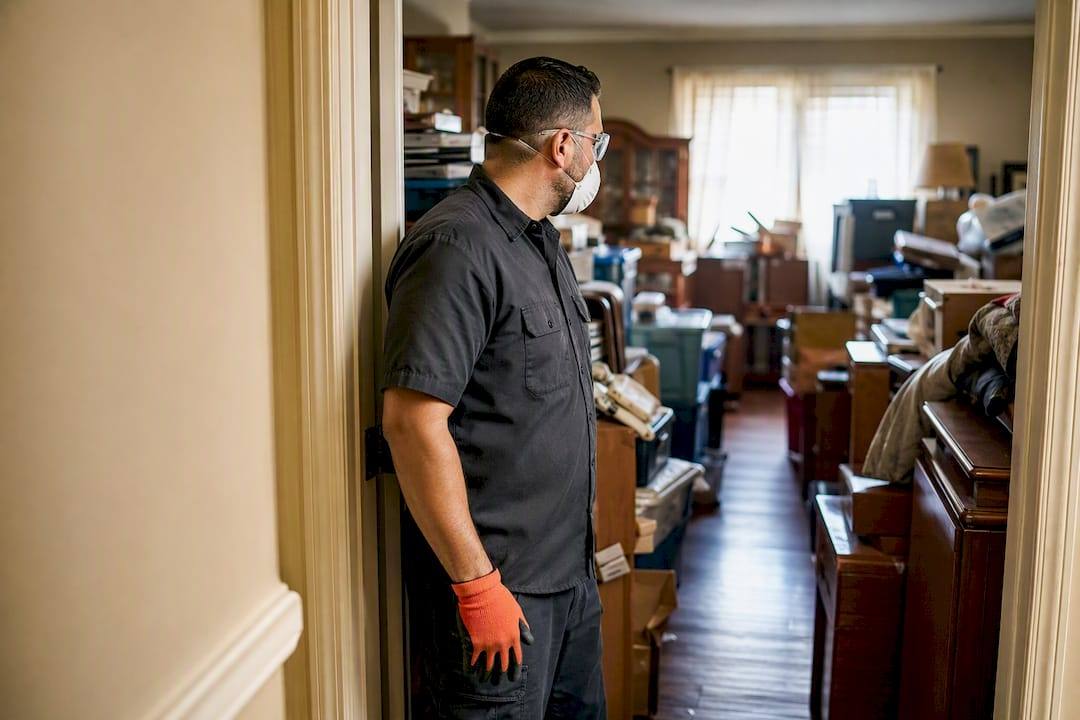
- Put on minimum protective gear: an N95 mask and disposable gloves.
- Set up a clean staging area away from the clutter, plus a locked box for cash, documents, and jewelry.
- Call 911 or a licensed biohazard remediation team immediately if you find sharps, decomposition odors, or heavy black mold.
Pro Tip: Take a five-minute walkthrough video with your phone before anyone moves a single item. It’s faster than photographing room by room and gives you a complete record if a dispute over belongings comes up later.
How Do You Assess the Severity of a Hoarding Situation?
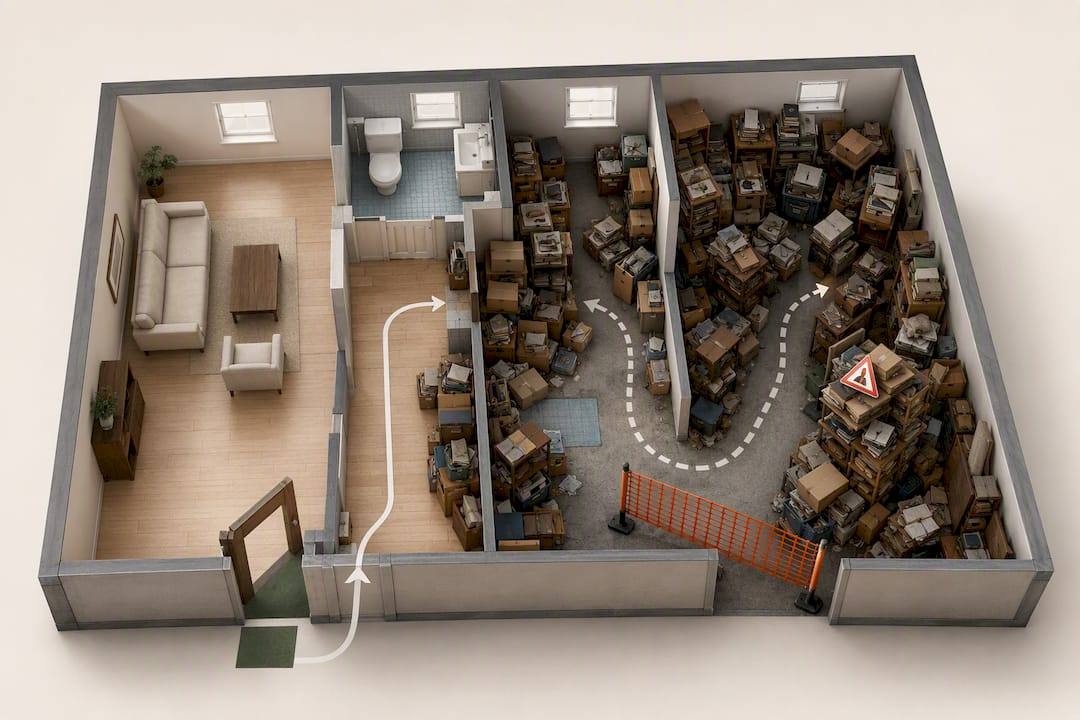
Walk each room with a checklist before deciding how many people or days the job needs. Look specifically for mold growth, pest activity (droppings, nests, live insects), blocked doors or windows, exposed wiring, and plumbing leaks under piles.
A simple 1 to 5 severity scale helps you plan resources fast:
- Level 1 to 2: Clutter is heavy but pathways exist, no active hazards. One or two people can handle it in a few days.
- Level 3: Rooms are largely inaccessible, some pest or moisture signs. Needs a small crew and a week or more.
- Level 4 to 5: Structural blockage, waste, or biohazard signs. Requires a specialized crew and possibly permits.
Photograph key rooms and closets, then write a short inventory of anything valuable or legally significant. Guides on the step-by-step hoarder cleanup process recommend this documentation step before any items leave the property, since it protects executors during probate and supports insurance claims if damage turns up later.
What Supplies Do You Need Before You Start Clearing?
Gear and logistics decided before day one save you from wasted trips and exposure risk. At minimum, bring N95 or P100 respirators, heavy-duty gloves, safety goggles, and disposable coveralls if dust or mold is visible. Basic tools include box cutters, flashlights, a wet/dry vacuum, and heavy contractor bags.
- Set up three physical zones: a clean area, a debris staging area, and a sorting zone.
- Label boxes clearly: keep, donate, recycle, trash.
- Order a dumpster sized for the severity level, and confirm truck parking or permits with your city if the dumpster sits on a street.
- Call local donation centers ahead of time. Many have limits on furniture or appliance drop-offs and won’t take items same-day without notice.
Pro Tip: Order a dumpster one size larger than you think you need. Compacted piles expand once they’re pulled apart and separated, and running out of space midway means a second delivery fee.
How Does the Four-Box Sorting Method Work?
Sort in small zones, one closet or storage system at a time, rather than jumping around the house. Finishing a visible section before moving on keeps momentum and gives everyone a sense of progress.
-
Keep: Items in daily use or with clear ongoing value go into this box first, no debate needed.
-
Donate: Usable clothing, furniture, and household goods that nobody in the home wants but someone else could use.
-
Recycle: Paper, cardboard, glass, and metal that your local program accepts.
-
Trash: Anything damaged, expired, or contaminated goes straight to the debris pile.
-
Hold for review: Keep a fifth, separate box strictly for sentimental items like photos or letters. Nobody decides on these during the main sweep.
If the person who hoards is present, use neutral, non-judgmental language rather than urgency or pressure. Family resources from the International OCD Foundation recommend scheduling short review sessions for the “hold” box instead of forcing decisions on the spot, which keeps the process from feeling like a loss happening in real time.
How Much Should You Haul, and What Needs Special Disposal?
Estimate truckloads generously. A cluttered three-bedroom home commonly fills more dumpster space than it looks like it should, since loose piles compress less efficiently than a truck can pack them.
- Standard household junk (furniture, clothing, general debris) goes to a regular dumpster or junk removal truck.
- Sharps, needles, and biological waste require a licensed biohazard hauler, never a standard dumpster.
- Chemicals, propane tanks, and old paint need a hazardous waste drop-off site.
- Appliances with refrigerant (fridges, window AC units) need certified disposal to handle the coolant legally.
- E-waste (TVs, computers, monitors) usually has a separate recycling stream in most counties.
Keep a written list of donated items with estimated values for tax purposes, and photograph anything donated before it leaves the property.
What Cleaning and Remediation Happens After Removal?
Once the space is empty, the real cleaning starts. HEPA vacuuming pulls fine dust and allergens that regular vacuums miss, and EPA-approved disinfectants handle surface bacteria on floors, counters, and walls.
- Carpet, drywall, and insulation that show mold staining or pest damage usually need full replacement, not just cleaning.
- Call a licensed mold remediation company if staining covers more than a small patch. Biohazard cleanup guidance notes that DIY mold removal in heavily hoarded homes often misses hidden growth behind walls or under flooring.
- Pest control may need a follow-up visit two to three weeks after the initial treatment to confirm the infestation is fully cleared.
- Final verification should include an air-quality check, updated photographs of every room, and a written sign-off before anyone moves back in.
How Long Does a Hoarder Cleanout Take and What Does It Cost?
Timelines track directly with severity level. A mild case with one or two rooms of heavy clutter typically wraps in two to four days. Moderate cases spanning most of a house run one to two weeks. Severe cases with structural blockage or biohazard remediation can stretch past four weeks.
Professionals typically build hoarder cleanout cost quotes with a simple formula: number of truckloads times the hauling rate, plus labor hours times crew size, plus any specialty surcharges for hazardous material handling.
- Stairs or long carry distances from the house to the truck add labor hours fast.
- Specialty disposal (chemicals, biohazard, appliances) carries its own line-item surcharge.
- Structural repairs from water damage or pest destruction add cost outside the cleanout itself.
- Rush requests, especially for evictions or estate deadlines, often carry a premium over standard scheduling.
For related project budgeting, our garage cleanout cost breakdown walks through similar pricing logic on a smaller scale.
When Should You Call in Professional Help?
Certain conditions mean the job has moved past a DIY weekend project. Visible biohazards, extensive mold coverage, structural damage, sharp waste, deceased animals (or worse), and serious pest infestations all call for a licensed crew rather than family members with trash bags.
- Professional teams bring containment equipment, full PPE, documented biohazard protocols, and coordination with remediation specialists.
- Before hiring anyone, ask for proof of insurance, a written estimate broken into truckloads, labor, and surcharges, and references from similar jobs.
- Confirm the company documents completed work with photos, which matters for probate, insurance, or family disputes later.
If you’re vetting providers, this rundown of on-demand junk removal options explains what a legitimate service should include before you sign anything.
How Do You Support the Person Who Hoards Through the Process?
Hoarding disorder is a diagnosable condition, and forcing fast disposal can undo therapeutic progress rather than help it, according to Mayo Clinic. The American Psychiatric Association recommends involving a mental-health professional whenever the situation allows for it, rather than treating the cleanout as a purely logistical job.
- Move at the person’s pace, and separate emotional review sessions from the physical labor of hauling.
- Coordinate timing with a therapist if one is involved, so the cleanout supports rather than disrupts treatment.
- Document every decision and keep written records to protect family members or executors from later disputes.
- A logistics team can manage the hauling, staging, and disposal side while leaving decision-making with the family and any treatment provider.
What Surprises Come Up Most Often on Real Cleanouts?
The most common surprise is discovering cash, jewelry, or important documents buried in ordinary-looking piles partway through a job. Crews that pause and check pockets, drawers, and paper stacks before hauling avoid costly mistakes. The fix is simple: document, label, and secure valuables before anything leaves the house.
— Mark
Let Fix Move Haul Handle the Heavy Lifting
You’ve got the framework now: assess, protect, sort, haul, clean. The part most families underestimate isn’t the sorting, it’s the physical hauling, dumpster coordination, and disposal routing that eats an entire weekend or more. Professional services handle estate cleanouts, junk removal, and senior downsizing with crews who show up ready to work, not just quote a price and leave.

Expect a walkthrough, a clear breakdown of truckloads and labor, and same-day scheduling in many cases. Have your address, a rough sense of square footage, and any known hazards (mold, pests, biohazard concerns) ready when you call, since that speeds up your quote significantly. If a senior in the family is involved, our senior downsizing services build in a slower, more compassionate pace than a standard junk pull. For everything else, from a single cluttered garage to a full estate, start with a free estimate through our estate cleanouts page and get a real number instead of a guess.
This article is general information, not a substitute for advice from a qualified doctor. Consult a qualified healthcare professional about your own circumstances before acting on anything here.
Sources
- Hoarding disorder - Symptoms and causes | Mayo Clinic
- Psychiatry
- Hoarder house cleanout dumpster rental | DumpsterMap
- Hoarding and biohazard cleaning | Intelligent Living
FAQ
How Long Does It Take to Clean Out a Hoarder House?
Mild cases take two to four days, moderate cases run one to two weeks, and severe cases with structural or biohazard issues can stretch past four weeks.
What Are the Five Levels of Hoarding Severity?
Cleanup professionals commonly use a 1 to 5 scale, from Level 1 (heavy clutter but clear pathways) up to Level 5 (severe blockage, structural damage, or biohazard conditions).
How Much Does It Cost to Have Someone Clean Out a Hoarder House?
Cost depends on truckloads hauled, labor hours, crew size, and any specialty surcharges for hazardous material disposal, so a small single-room job costs far less than a full-house severe case.
What Does a Level 1 Hoarder House Look Like?
A Level 1 home has visible clutter and some disorganization, but all doors, windows, and exits remain fully accessible with no structural or safety hazards present.
Can I Do a Hoarder Cleanout Myself?
You can handle mild to moderate cases yourself with proper PPE and the four-box method, but any home with mold, pests, sharps, or structural damage needs a licensed professional crew instead.