
EPA Compliant Refrigerator Disposal for SW Florida Homeowners
EPA Compliant Refrigerator Disposal for SW Florida Homeowners
The safest legal routes are certified appliance recycling, retailer haul-away when you buy a replacement, municipal bulky-item pickup, or a junk-removal service that coordinates refrigerant recovery. Donate or sell it instead if the unit still runs. Whatever route you pick, never vent refrigerant yourself or drag the fridge to the curb without checking local rules first.
TL;DR:
- Refrigerants must be recovered by certified technicians before disposal, and venting refrigerant into the air is strictly illegal.
- Using retailer haul-away or on-demand junk removal services ensures refrigerant recovery and proper disposal, often with same-day pickup.
- Municipal bulky-item pickup can be affordable but demands prior notice, door removal, and strict adherence to scheduling rules.
- Donating or selling a working refrigerator can eliminate disposal fees and is preferable if the unit is still functional and odor-free.
- Last-resort options like landfills require confirmed refrigerant recovery acceptance, making them less reliable and generally unsuitable for routine disposal.
Table of Contents
- Refrigerator Disposal Options at a Glance
- How Each Refrigerator Disposal Method Actually Works
- Prepping Your Fridge for Pickup Without Getting Rejected
- Why Refrigerant Recovery Is Non-Optional
- What We’ve Learned Handling Fridge Removal in Southwest Florida
- Skip the Legwork: Book Fridge Removal Instead of DIY-ing It
- Sources
Refrigerator Disposal Options at a Glance
Your best route usually comes down to two questions: does it still run, and how fast do you need it gone? Here’s the quick match:
- Certified recycling center: best for a broken or dead unit, since RAD partners handle refrigerant recovery correctly.
- Retailer haul-away: makes sense when you’re buying a replacement and want the old one gone same day.
- Municipal bulky pickup: the cheapest option if your city or county offers it, but expect scheduling rules.
- On-demand junk removal: fastest hands-off choice when you don’t want to lift a finger.
- Donate or sell: the smart move for a working fridge. Skip disposal fees entirely and help someone out.
- Utility rebate programs: some power companies pay you to retire an old, energy-hogging unit.
How Each Refrigerator Disposal Method Actually Works
Picking a method is the easy part. Knowing what to ask before you commit is where most people get tripped up, especially with a rule most homeowners never hear about until it costs them a rejected pickup.
1. Certified appliance recyclers and RAD partners
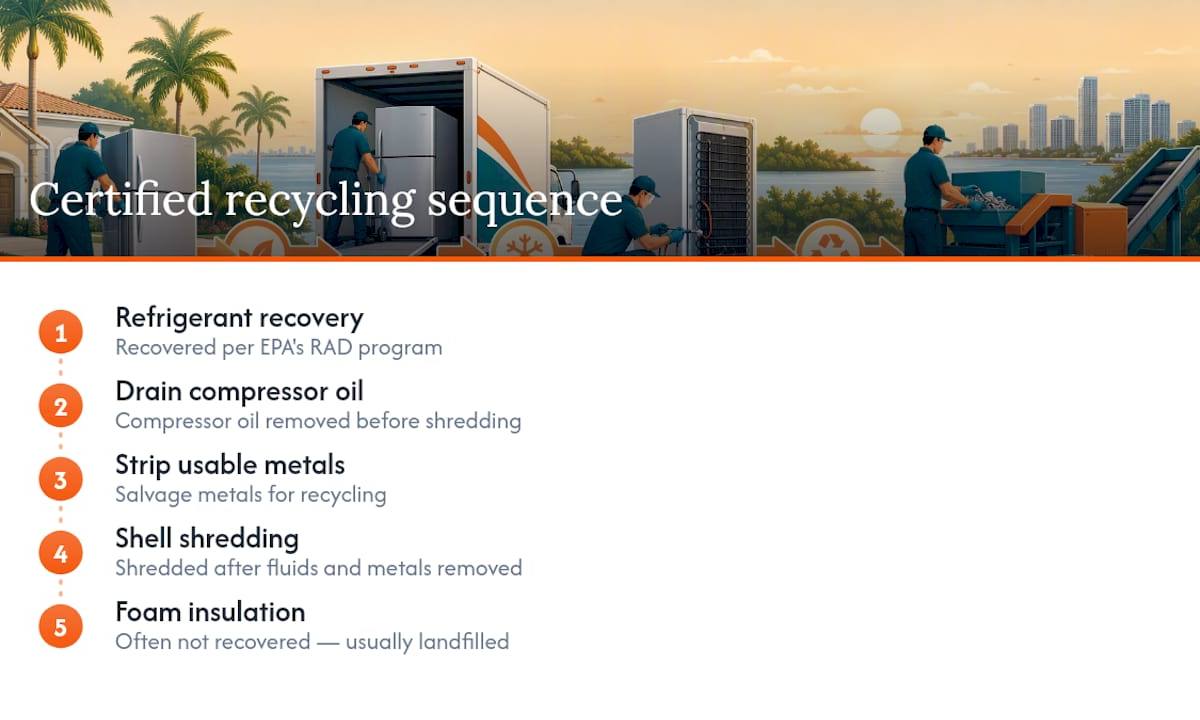
Certified recyclers pull the refrigerant, drain compressor oil, and strip usable metals before the shell gets shredded. The EPA’s RAD program exists specifically because refrigerant can’t legally be released into the air, and a certified partner has the equipment and training to recover it correctly. Foam insulation is the catch: it’s rarely required to be recovered, so it often still ends up in a landfill even at a responsible facility. Search directories like GreenCitizen’s Green Directory to find one near you, and expect a modest fee unless a rebate program offsets it.
2. Retailer haul-away or trade-in pickup
Buying a new refrigerator is the easiest time to get rid of the old one. Most big-box and appliance retailers will haul away your old unit when they deliver the new one, sometimes free, sometimes for a small fee. Ask directly whether they coordinate refrigerant recovery and which certified recycler they use. Some retailers only partner with vetted recyclers, and a few even shave a small rebate off your purchase for turning in the old model.
3. Municipal bulky-item collection
Most counties and cities will pick up a refrigerator at the curb, but almost none of them will take it without conditions. Collier County, for example, requires 48-hour notice for specialty bulky pickup and insists the unit be emptied with the doors removed first. Skip either step and the crew will leave it sitting there. Lead times run anywhere from a couple of days to two weeks depending on your municipality’s schedule, and some jurisdictions charge a flat bulky-item fee on top of your regular waste bill.
4. On-demand junk removal and home-assistance services
This is the route for anyone who wants the fridge gone without making three phone calls first. A full-service crew shows up, does the heavy lifting, and drops the unit at a certified recycler on your behalf, often the same day. What they can’t do is skip refrigerant recovery. Any legitimate operator either recovers it themselves with certified equipment or routes the unit through a partner who does. Pricing for this kind of appliance removal typically varies depending on access, stairs, and distance to the recycling facility.
5. Donating or selling a working refrigerator
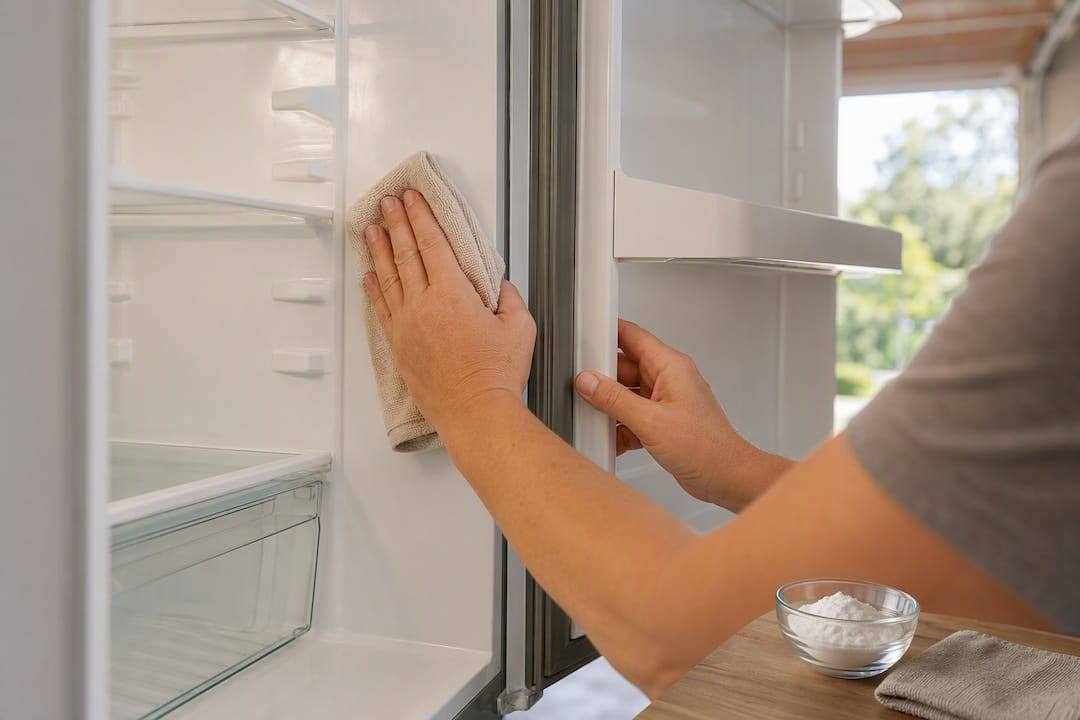
If the compressor still runs and the seals are intact, donation is often the simplest and cheapest path. Local charities, appliance resale shops, and online marketplaces will usually take a clean, working unit off your hands, sometimes with free pickup included. Wipe it down, deodorize the interior, and photograph it inside and out before listing. Pro Tip: A lingering odor kills more donation and resale deals than dents or scratches ever will. A refrigerator odor treatment before pickup day can be the difference between a quick sale and a unit nobody wants.
6. Scrap metal yards and independent appliance recyclers
Scrap yards will sometimes pay a small amount for the metal content, but many now refuse refrigerators outright unless refrigerant has already been removed by a certified tech. Call ahead. Showing up with a fridge a yard won’t accept means loading it right back into your truck.
7. Recycling events and utility rebate programs
Plenty of utility companies run seasonal turn-in programs that pay a flat bounty, sometimes as bill credit, for retiring an old, inefficient refrigerator. Eligibility usually hinges on the unit’s age and whether it’s still running, so check your provider’s site before you commit to any other disposal method.
8. Landfill or transfer station as a last resort
Some transfer stations will accept a refrigerator directly, but this should be your last option, not your first. Confirm the facility handles refrigerant recovery on-site; plenty simply refuse appliances that haven’t been pre-certified, which sends you right back to square one.
Prepping Your Fridge for Pickup Without Getting Rejected
A rejected pickup is almost always avoidable. Before anyone loads your refrigerator onto a truck:
- Empty it completely, defrost the freezer, and wipe down the interior.
- Remove loose shelves and bins if the recycler or hauler asks for it.
- Take the doors off or secure them shut. This isn’t optional in a lot of areas since unsecured doors create a real child-entrapment hazard.
- Measure doorways and hallways, and note the unit’s weight so you know whether you need a dolly or an extra set of hands.
- Snap photos and jot down the make, model, and year. You’ll want this for resale listings or rebate paperwork.
- Ask directly who’s handling refrigerant recovery before you schedule anything. Don’t assume it’s covered.
Pro Tip: If you’re donating a working fridge, that same “record everything” habit pays off twice: once for the charity’s intake form, and again if you want to claim a tax deduction later.
Why Refrigerant Recovery Is Non-Optional
Refrigerants used in home appliances must be recovered by a technician using certified equipment before disposal. Venting refrigerant into the air is prohibited, and final disposers are expected to document that recovery happened when a third party performs it.
That’s the core of EPA’s safe-disposal procedures, and it’s not a suggestion. Ozone-depleting substances and HFCs cause real environmental damage when released, which is exactly why certified recovery exists as a checkpoint. Some municipalities go further and require proof the refrigerant’s already been removed before they’ll accept a curbside unit. If you’re not sure your city does, check your local waste authority’s page before you set anything out.
What We’ve Learned Handling Fridge Removal in Southwest Florida
Every fridge job starts the same way for us: confirm the doors come off or lock, confirm the unit is empty, and confirm where the refrigerant recovery happens before the truck ever leaves. We coordinate with certified recyclers for that last step rather than cutting corners, because that’s the one part of this job you can’t wing. One recent pickup in Bonita Springs looked simple until we found a fridge wedged behind a rebuilt lanai wall, which is a good reminder that access, not the appliance itself, is usually what turns a quick job into a long one.
— Mark
Skip the Legwork: Book Fridge Removal Instead of DIY-ing It
Recycling directories, rebate forms, and municipal scheduling windows all work, but they take time most homeowners don’t have lying around. There are alternative services for Southwest Florida residents who’d rather make one call than juggle four: some companies coordinate pickup, transport, and drop-off at a certified recycler so the refrigerant handling is never left to chance.

Booking is straightforward: request a time, tell us whether the doors are off and the unit’s empty, and a crew handles the rest, often the same day. Pricing generally falls in line with typical appliance removal costs, and if you’re replacing the unit through a store run, our Home Depot and Lowe’s pickup service can grab the new one while we haul off the old. Ready to get it off your hands? Start a junk removal booking and skip the scheduling headaches entirely.
Sources
- Appliance disposal | US EPA
- Residential Collections Services | Collier County, FL
- How to Dispose of a Refrigerator Properly - Bob Vila
- How to dispose of a refrigerator | GreenCitizen