
Get Ready to List Fast: 30 Day Plan, 7–14 Day Sprint, On Demand Help

Get Ready to List Fast: 30 Day Plan, 7–14 Day Sprint, On Demand Help
Declutter the main living areas, deep clean every surface, fix small visible defects, refresh the curb appeal, and book your listing photos. Those five moves cover most of what separates a house that lingers from one that sells in days. A realistic 30-day sprint gets all of it done properly, and outsourcing tasks like junk removal or heavy cleaning can compress that timeline even further.
TL;DR:
- Focusing on decluttering the main rooms and depersonalizing spaces significantly improves listing photos and buyer visualization within a short timeline.
- Deep cleaning, fixing small visible defects, and handling essential repairs before listing can be completed in a weekend or outsourced to save valuable time.
- A structured 30-day plan allows for thorough preparation, including staging and professional photography, but a condensed 7 to 14-day sprint is achievable with prioritization and outsourcing.
- Outsourcing labor-intensive tasks like junk removal, furniture moving, and quick repairs can save days and ensure completion within strict deadlines.
- Preparing a comprehensive document package and optimizing each room for photos increases buyer confidence and helps prevent negotiation stalls.
Table of Contents
- How Do You Prepare a Home for Listing Fast?
- What’s the Fastest Way to Get a House Sale Ready?
- What Should Each Room Look Like Before Photos?
- Which Repairs Should You Fix Before Listing?
- How Should You Prep for Listing Photos?
- When Should You Outsource Instead of DIY?
- What Paperwork Should You Gather Before Listing?
- Speed vs. Price: What Sellers Actually Trade Off
- Get Your Listing Ready Without Losing a Week to Logistics
- Sources
- FAQ
How Do You Prepare a Home for Listing Fast?
Speed comes from sequencing, not from doing everything at once. The tasks below deliver the biggest jump in buyer interest for the least amount of time and money, and they’re the ones agents point to first when a seller says “I need this house on the market next week.”
Start with decluttering. Clear kitchen counters, thin out bookshelves, and pack away anything that makes a room look smaller than it is. Depersonalize while you’re at it: family photos, kids’ artwork, and collections all make it harder for a buyer to picture their own life in the space. This isn’t just a tidiness issue. It’s a data issue. Homes shown as neutral, uncluttered spaces perform better in listing photos and in person, which is why 83% of buyers’ agents say staging helps buyers visualize a property as their future home.
Pro Tip: If you’re short on time, focus your decluttering budget on the three rooms buyers weigh most: the kitchen, the primary bedroom, and the living room. A spotless secondary bathroom won’t save a cluttered kitchen.
Next comes cleaning, and it needs to go deeper than a weekend tidy-up—see our guide on staging homes with clean floors for tips that support quick floor prep and better presentation. Wipe down baseboards, clean inside the oven and refrigerator, and steam-clean carpets if they’ve seen a few years of foot traffic. Odors are a silent dealbreaker. Pet smells, cooking residue, and musty closets register instantly with buyers walking through, even when they can’t name what’s bothering them.
Then handle the small stuff that quietly signals neglect:
- Replace burned-out bulbs and mismatched light fixtures
- Tighten loose cabinet handles and door hinges
- Fix leaky faucets and running toilets
- Touch up scuffed walls with matching paint
- Trim overgrown shrubs and edge the lawn
Most of this is a weekend of work if you do it yourself, or a single half-day booking if you hire it out. The math is simple: a few hundred dollars in labor now usually costs less than the price cut a buyer negotiates after spotting these issues during a walkthrough. Roughly 72% of sellers complete at least one improvement project before listing specifically to avoid that kind of negotiation friction.
What’s the Fastest Way to Get a House Sale Ready?
There are two realistic paths here: a structured 30-day sprint, or a compressed 7 to 14 day emergency plan for sellers who genuinely cannot wait. Both work. The 30-day version just gives you breathing room for things that can’t be rushed, like contractor scheduling and paint drying time.
The 30-day plan
Week 1: Declutter and assess. Walk through every room like a buyer would. Pack away personal items, clear countertops, and remove at least a third of the furniture from any room that feels tight. This is also when you book a pre-listing inspection so you have three weeks to act on whatever it finds.
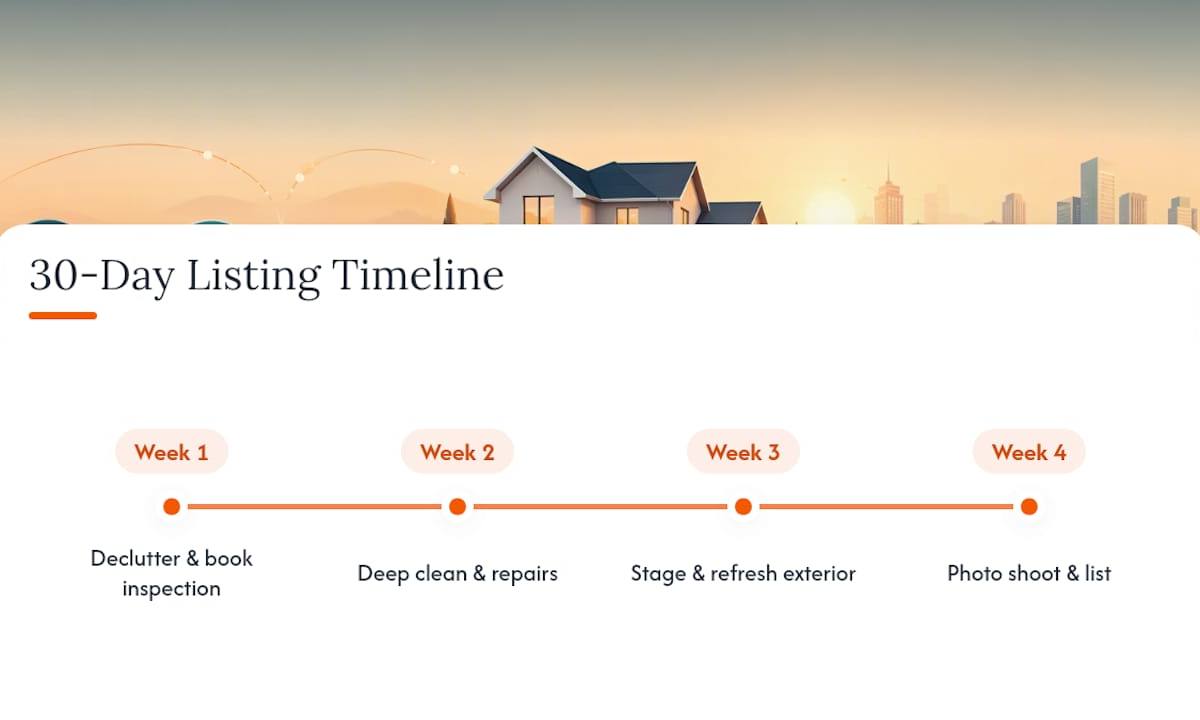
Week 2: Deep clean and repair. Tackle carpets, grout, appliances, and windows. Schedule any contractor work uncovered by the inspection, prioritizing safety and functional issues over cosmetic ones. If you’re hiring help for hauling away old furniture or junk from a garage cleanout, this is the week to book it.
Week 3: Stage and refresh. Rearrange furniture to open up sightlines, add neutral accents, and handle exterior touches like a pressure wash or fresh mulch. Effective staging is often more about rearranging what you own than buying new furniture, so don’t assume this week requires a shopping trip.
Week 4: Photograph and list. Book your photographer for early in the week so you have time to fix anything the test shots reveal, like glare, clutter you missed, or an awkward angle. Starting prep four to six weeks before listing gives inspection results, deep cleaning, and cosmetic work time to finish before the camera shows up, which is exactly what this schedule builds in.
The 7 to 14 day emergency plan
When 30 days isn’t an option, cut straight to what actually moves the needle in photos and showings.
- Days 1 to 2: Declutter and depersonalize the three rooms buyers care about most. Book a junk removal or cleanout crew immediately if you have excess furniture or garage overflow.
- Days 3 to 5: Deep clean the entire house, with priority on kitchen, bathrooms, and flooring. Handle only the repairs that are visibly obvious to a walkthrough.
- Days 6 to 8: Quick staging pass. Rearrange furniture, add a few plants or neutral linens, and clear the exterior of vehicles, toys, and trash bins.
- Days 9 to 10: Book same-day or next-day photography. Most photographers can turn same-week if you call early in the sprint rather than waiting.
- Days 11 to 14: Final walkthrough, list the property, and confirm your document package is ready for the first serious offer.
Coordinating booking windows matters more than any single task: schedule junk removal and deep cleaning first, staging and repair crews second, and photography three to seven days after staging so there’s time to adjust anything that looks off in test shots.
What Should Each Room Look Like Before Photos?
Buyers judge a house room by room, and each space has its own quick-win checklist.
Kitchen
Clear every counter down to two or three intentional items, like a bowl of fruit or a cutting board leaned against the backsplash. Clean the inside of the oven, microwave, and refrigerator, since buyers open all three during showings more often than sellers expect. Hide small appliances like toasters and coffee makers in a cabinet, and stage one clear focal point, whether that’s a fruit bowl on the island or a simple vase near the sink.
Bathrooms
Scrub grout lines and recaulk around tubs and sinks if the caulk has yellowed or separated. Clear every counter of personal products and replace worn towels with matching neutral ones. A fresh shower curtain is one of the cheapest fixes in the entire house for how much it improves a photo.
Bedrooms and living areas
Make every bed with simple, neutral bedding. Remove at least one piece of furniture from any room that feels crowded, since buyers consistently misjudge square footage in a tight space. Closets should look roughly half full rather than packed, because an overstuffed closet reads as “not enough storage” even when the house has plenty.
Pro Tip: Take everything off closet shelves and floors, sort it into keep, donate, and haul-away piles, then only put back what you’d actually want a buyer to see. Half the battle is resisting the urge to just shove things back in.
Exterior
Mow and edge the lawn, sweep walkways, and pressure wash the driveway and front entry if it’s showing algae or grime. Give the front door a fresh coat of paint if it’s faded, since it’s the single most photographed feature of the exterior. Move all vehicles, trash cans, and kids’ toys out of frame before the photographer arrives.

Which Repairs Should You Fix Before Listing?
Not every flaw needs fixing before you list, but some flaws will cost you a sale or a serious price cut if you ignore them. The distinction is safety and function versus cosmetics.
Repairs that commonly cause buyer objections or derail negotiations include:
- Roof damage or visible wear near the end of its expected lifespan
- An aging HVAC system with no service records
- Water stains, active leaks, or signs of past water damage
- Exposed wiring, broken railings, or other safety hazards
- Foundation cracks wider than a hairline
Most of these surface during a home inspection, which is exactly why a pre-listing inspection is worth the money on a tight timeline. It typically runs $300 to $600 and gives you the chance to fix or disclose issues on your own schedule instead of scrambling after a buyer’s inspector flags them. That shift in timing changes who holds the negotiating leverage: sellers who know their house’s condition ahead of time can price accordingly or make targeted fixes, rather than reacting to a buyer’s inspector under deadline pressure.
Use a simple rule when time is short: safety and functional issues come first, cosmetic issues come second. A cracked outlet cover gets fixed before a slightly dated backsplash. A running toilet gets fixed before a scuffed baseboard. If your sprint window forces tradeoffs, spend the hours and dollars where a buyer’s inspector or a lender’s appraiser is most likely to stop the deal.
How Should You Prep for Listing Photos?
Photos are what get a buyer through the front door, and most of the work that makes them look good is invisible to a casual walkthrough but glaring on camera.
Before the photographer arrives, open every curtain and blind, turn on every light in the house (including lamps that would normally stay off), and do one more pass for clutter you missed the first time. Add a few live plants or a neutral throw blanket to rooms that feel flat. Small green touches photograph well and cost almost nothing.
Staging itself comes in levels, and picking the right one depends on your timeline and budget:
- DIY rearranging: Free, and often enough if your furniture is already in decent shape. Just focus on flow and removing excess pieces.
- A staging consultation: A few hundred dollars for a professional walkthrough that tells you exactly what to move, remove, or add.
- Partial physical staging: Renting furniture or accents for just the rooms buyers weigh most, like the living room and primary bedroom.
- Virtual staging: Digitally furnished photos for vacant homes, done in a day or two, though most agents recommend disclosing that the images are virtually staged so buyers aren’t surprised at the showing.
Pro Tip: If you’re short on both time and budget, “shop your own house” first. Move a chair from the guest room, swap in a nicer rug from the hallway, or borrow a mirror to brighten a dark corner. You’d be surprised how much staging you can do without spending a dollar.
On photo day itself, do a final sweep: hide chargers and cords, clear counters one more time, secure valuables and prescription medications, and check that exterior shots aren’t compromised by trash day or a parked delivery truck. Late afternoon light tends to photograph best for most exteriors, so ask your photographer about timing if the listing depends heavily on curb appeal shots.
When Should You Outsource Instead of DIY?
Some tasks are worth doing yourself. Others eat days you don’t have on a tight sprint, and that’s where bringing in help pays for itself.
The best candidates for outsourcing are the physically demanding or time-consuming jobs: junk removal from a garage or attic cleanout, hauling away old furniture that won’t sell or donate easily, last-mile pickup and delivery for staging pieces, rapid property cleanouts, small handyman repairs, and TV mounting or wall patching left over from removed electronics. These are exactly the jobs that stall a sprint timeline when a seller tries to squeeze them in after work or on a single weekend.
On-demand services can turn a multi-day task into a same-day booking, which matters enormously when you’re working a 7 to 14 day emergency plan instead of a full 30-day runway. Before hiring anyone for this kind of work, check four things:
- Same-day or next-day availability, confirmed in writing
- Transparent, upfront pricing before the crew shows up
- Insurance coverage and any relevant credentials for the job type
- A clear scope of work so nothing gets left half-finished
A structured, sequenced cleanout process built for fast turnovers applies just as well to a seller racing a deadline as it does to a landlord between tenants.
What Paperwork Should You Gather Before Listing?
Buyers move faster when a seller has answers ready instead of scrambling mid-negotiation. Pull together your document package early, ideally in the same week you start decluttering.
Gather appliance manuals and warranties, permit records for any renovations, recent utility bills, HOA documents if applicable, and a survey or floor plan if you have one on file. None of this takes more than an hour or two if you know where to look, but it can take days if you’re digging through boxes after an offer comes in.
Your final showing routine matters just as much as the paperwork. Before every showing, turn on all the lights, set the thermostat to a comfortable temperature, remove pets and valuables, and do a two-minute tidy pass on high-traffic surfaces. A prepared document package signals to buyers and their agents that the seller is organized and the deal will move smoothly, and that confidence often translates into fewer stalled negotiations and faster closings.
Speed vs. Price: What Sellers Actually Trade Off
Speed and price pull against each other more often than sellers expect, and knowing which one you’re optimizing for changes almost every decision in this guide. If you’re moving for a job start date, a school calendar, or a closing on your next home, push hard for speed and accept that you may leave some money on the table by skipping a full renovation-level refresh. If your timeline has real flexibility and your local market rewards it, investing more time in repairs and staging usually pays for itself.
The tasks sellers delegate most often on a tight sprint are the ones that eat calendar days without adding much decision making: junk hauling, furniture moves, and quick handyman fixes. Hand those off, and put your own hours into the things that actually require your judgment, like which repairs to prioritize.
Whichever path you choose, loop in your agent before you start swinging a paintbrush or scheduling contractors. Document the home’s condition with photos or video before showings begin, so there’s a clear record if a dispute comes up later.
— Mark
Get Your Listing Ready Without Losing a Week to Logistics
Most of the tasks in this guide take hours, not skill, but they still eat the one thing a fast listing doesn’t have: time. Local home assistance services can handle the physical, time-consuming parts of getting a home show-ready, so you’re not spending your sprint hauling furniture or hunting down a handyman between showings.

Junk removal and property cleanouts clear out garages and closets fast, furniture pickup and delivery handles staging pieces coming in or leftover furniture going out, and moving help covers the heavy lifting when you’re rearranging rooms for photos. TV mounting, minor repairs, and outdoor or lanai cleaning round out the list of jobs that typically slow a seller down the most. Same-day service is available for sellers on the tightest timelines, while scheduled bookings work better when you’re following the full 30-day plan.
If you’re working with an agent, the Realtor & Listing Prep Services page outlines how Fixmovehaul coordinates directly with listing agents on sequencing and scope. For everything else, check current pricing and request a fast quote to see how much time you can take off your sprint this week.
Sources
- Profile of Home Staging — National Association of Realtors
- How to get your house ready to sell — Zillow
- How to prepare your house for sale — Opendoor
- How to sell a house in 30 days — HomeLight
- How to stage a house inexpensively — Redfin
FAQ
How Do You Quickly Prep a House for Sale?
Focus on five things in order: declutter and depersonalize the main rooms, deep clean every surface, fix small visible defects, refresh curb appeal, and book your photographer. A tight 7 to 14 day version of this sequence is realistic if you outsource tasks like junk removal and heavy furniture moves rather than doing everything yourself.
What Is the 3-3-3 Rule in Real Estate?
Definitions of the 3-3-3 rule vary by market and source, and there’s no single agreed-upon version tied to home prep specifically. If you’ve heard it from a local agent, ask them directly what it means in your market rather than assuming a national standard.
What Is the Hardest Month to Sell a House?
This varies by region and local market conditions rather than following one universal calendar. Talk to a local agent about seasonal demand patterns in your specific area before assuming a slow month applies to you.
What Makes a House Sell Quickly?
A clean, decluttered, well-lit home with strong curb appeal and no obvious deferred repairs sells faster because buyers can picture themselves in it right away. Staging measurably helps with that visualization, and a pre-listing inspection removes the risk of a surprise that stalls negotiations later.
How Much Does a Pre-Listing Inspection Cost?
A pre-listing inspection typically runs $300 to $600, depending on home size and location. It’s worth the cost on a fast timeline because it lets you fix or disclose issues before a buyer’s inspector finds them under negotiation pressure.