
20–24 Inch Bed Height for Seniors and Caregivers: Measure Safely
20–24 Inch Bed Height for Seniors and Caregivers: Measure Safely
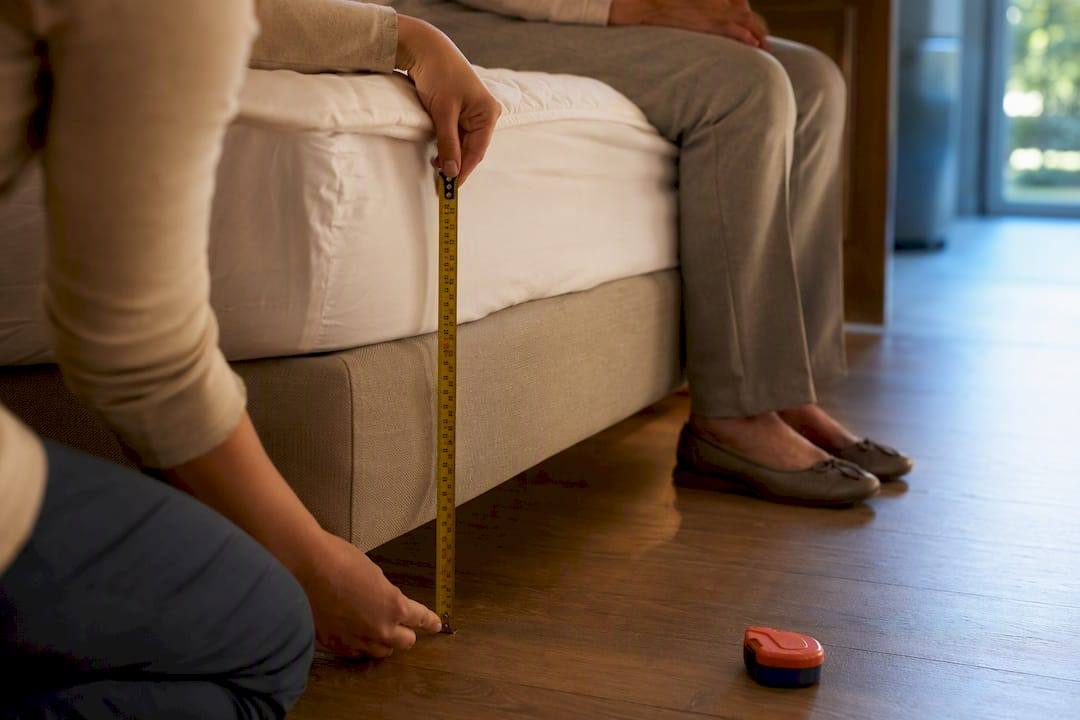
The safest mattress top height for most seniors sits between 20 and 24 inches off the floor. Check the fit with the 90 degree knee test: sit on the edge, feet flat on the floor, and your knees should form roughly a right angle. Measure the whole stack, mattress, box spring, and frame together, and keep the space around the bed clear before you touch the height at all.
TL;DR:
- Most seniors should aim for a bed height between 20 and 24 inches, adjusted based on their leg length and the seated knee test to minimize fall risk.
- Beds higher than 24 inches or lower than 18 inches can increase the likelihood of falls or unsafe transfers, especially for individuals with specific mobility conditions.
- Using risers, low-profile frames, or adjustable bases can help customize bed height safely, but stacking unstable objects is dangerous and should be avoided.
- Clear pathways and proper bedroom layout are equally important as bed height, including a 36-inch wide walking space, a 16-inch transfer zone, and good lighting.
- For frequent transfers or caregiver assistance, adjustable beds or safe height modifications can mitigate strain and improve safety for both seniors and caregivers.
Table of Contents
- Why the 20 to 24 Inch Bed Height Range Lowers Fall Risk
- How to Measure the Right Bed Height for One Person
- Safe Ways to Raise or Lower a Bed
- Bedroom Layout Changes That Matter as Much as Bed Height
- When an Adjustable or Medical Bed Makes More Sense
- Recommended Bed Heights for Specific Mobility Conditions
- Getting In and Out With a Walker or Wheelchair
- Matching Bed Height to Your Own Body, Not a Chart
- Bed Height and Caregiver Transfers
- What We See Fixing Beds in Real Homes
- Get the Height Right Without Doing the Heavy Lifting
- Sources
- FAQ
Why the 20 to 24 Inch Bed Height Range Lowers Fall Risk
The 20 to 24 inch range isn’t arbitrary. It comes from basic sit-to-stand mechanics: when a bed sits too low, a person has to generate far more force from the hips, knees, and ankles to push upright, and that extra demand on leg strength is exactly what many seniors don’t have to spare. A bed that’s too high creates a different problem. Feet dangle, balance shifts backward on the way down, and the drop from mattress edge to floor becomes its own hazard during a stumble.
A clinical study on patient-specific bed height found that low bed height was, counterintuitively, the least safe setting tested, and that bed height showed up as a statistically significant factor in fall episodes. That study’s conclusion matters more than any single number: match the bed to the person’s lower-leg length, not to a generic chart. What works for a 5-foot-2 grandmother won’t work for her 6-foot-1 husband, even if they share the same mattress.
Sit-to-stand mechanics, in plain terms:
- Too low: knees rise above hip level while seated, forcing the quads and hip flexors to do most of the standing work.
- Too high: feet don’t reach the floor, so the transition down involves a small drop and a backward-leaning recovery.
- Just right: knees at roughly 90 degrees, feet flat, so standing is mostly a forward shift of weight rather than a leg-strength contest.
Pro Tip: If a senior needs to push off the mattress or a nightstand to stand up, that’s a sign the bed sits too low for their leg length, not a normal part of aging.
A few situations call for adjusting outside the standard range. Very tall seniors may need a mattress top closer to 25 or 26 inches to keep their knees from rising above hip level. Very short seniors, or those under 5 feet, sometimes need something closer to 18 inches. Wheelchair users have an entirely different target: bed height should typically match or sit slightly above the wheelchair seat height to make a level, sliding transfer possible instead of a step-down or step-up transfer.
How to Measure the Right Bed Height for One Person
Getting this right takes about ten minutes and two household items: a tape measure and a firm, armless chair. Skip the guesswork and measure the person, not the furniture catalog.
- Do the seated knee check first. Have the person sit on a firm dining chair with feet flat on the floor and hips square. Note whether the knee angle looks close to 90 degrees. If the chair seat itself is roughly 17 to 19 inches, that’s a rough proxy for what the bed height should feel like.
- Try the sit-on-bed test on the current mattress. Have them sit on the edge of the existing bed, feet flat, and watch what happens when they stand without pushing off with their hands. If they lean far forward, rock, or need momentum to get up, the bed is likely too low for their leg length.
- Measure floor to mattress top, not floor to frame. Run the tape from the floor straight up to the top surface where the person actually sits, including any mattress topper. A frame measurement alone will mislead you every time.
- Add up every layer separately, then total it. Frame height, box spring or foundation height, mattress thickness, and topper thickness all stack. A typical setup, a 7 inch frame plus a 9 inch box spring plus a 10 inch mattress, can easily push total height well past 24 inches without anyone realizing it until they measure.
- Account for carpet and partners. Thick carpet or padding can add half an inch to an inch of effective height. If two people share a bed and have different leg lengths, note both target heights before deciding on a fix.
Pro Tip: Measure at the exact spot where the person sits down each night, usually the edge closest to the bathroom or nightstand. Mattress firmness varies slightly across the surface, and edge support differs from center support on many mattresses.
Safe Ways to Raise or Lower a Bed
Once you know the target height, the fix is usually simpler than buying a new bed. The right method depends on whether you’re going up or down, and by how much.
To lower a bed:
- Remove the box spring entirely and set the mattress on a low-profile foundation or slatted platform frame.
- Swap a thick, high-loft mattress for a lower-profile model, which can shave 2 to 4 inches off the total stack.
- Choose a platform bed frame designed to sit close to the floor from the start, rather than trying to modify an existing frame.
To raise a bed:
- Add rated bed risers under each leg. These are purpose-built and typically add anywhere from 1 to 6 inches in even increments.
- Swap in a taller box spring or foundation if the current one is unusually low-profile.
- Move to a thicker mattress, though this changes firmness and feel, not just height.
- Consider an adjustable base, which lets you dial in height (and sometimes head and foot angle) without swapping furniture again later.
The safety cautions matter more here than the method itself. Check the weight rating on any riser before you buy, factoring in the combined weight of the mattress, frame, and both sleepers if the bed is shared. Set risers on stable, non-slip surfaces, never on carpet padding alone or on top of another makeshift object. A home-adaptation guide from an occupational therapy practice is blunt about one point worth repeating: never stack unrated blocks, bricks, or books to raise a bed. They shift under load, and a bed that tips during a transfer is far more dangerous than a bed that’s simply a few inches off the ideal height.
If the household includes a step for the taller partner, use a stable step with a handrail, not a stool or a box. For couples with a meaningful height difference, a split-surface arrangement, such as an adjustable base or two mattresses of different thickness on one platform, avoids forcing either person into an unsafe compromise.
Before disassembling an old frame to swap in a new base, a step-by-step bed disassembly guide walks through removing hardware safely, which matters if the frame is heavier or more awkward than it looks.
Bedroom Layout Changes That Matter as Much as Bed Height
Getting the mattress height right doesn’t help much if the path to the bathroom is blocked by a laundry basket. The National Institute on Aging’s room-by-room fall-prevention guidance treats clutter clearance as equally important to any furniture adjustment, and the layout details below back that up.
- Keep primary walking paths at least 36 inches wide, with 42 inches preferred on routes used daily, a benchmark drawn from accessibility clearance guidance and aging-in-place design standards.
- Preserve a 16 to 18 inch clear transfer zone directly in front of the mattress edge, since that’s the space a person swings their legs through to stand.
- Allow a 5 foot turning radius near the bed if a walker or wheelchair needs to pivot.
- Remove throw rugs, loose cords, and low furniture (baskets, floor lamps, pet beds) from the path between the bed and bathroom.
- Add a nightlight or motion-sensor light so the transition from sleep to standing happens in visible light, not darkness.
- Keep a phone or flashlight within arm’s reach of the pillow, and install a grab bar or sturdy bed rail if balance is a known issue.
The American Academy of Orthopaedic Surgeons’ home safety checklist lists an accessible, easy-to-exit bed alongside lighting and trip-hazard removal as core steps, not optional extras. Treat all of them as one project, not separate to-dos.
When an Adjustable or Medical Bed Makes More Sense
A riser or a new mattress solves most height problems. Some situations call for more.
- Frequent overnight transfers. If someone gets up multiple times a night for the bathroom or medication, an adjustable base that raises the head and foot can make each transfer meaningfully easier on joints.
- Significant weakness or recovery from surgery. A hospital-style adjustable bed lets a caregiver raise the entire sleeping surface to a comfortable working height for changes, dressing, or physical therapy exercises.
- Caregiver strain. If a caregiver is lifting or repositioning someone daily, an adjustable base reduces the bending and twisting that leads to caregiver back injuries over time.
Before buying, check with a physical therapist about the specific height and angle settings that fit the person’s condition, and ask an insurer directly what durable medical equipment coverage applies rather than assuming. Coverage rules vary too much to guess.
Pro Tip: If the bigger investment isn’t justified yet, a bedside step with a handrail plus a slide-transfer board covers a surprising amount of ground for a fraction of the cost of a full adjustable bed.
For many households, the simpler fix, a properly measured platform frame or a set of risers, solves the problem without the cost or complexity of a hospital bed at all.
Recommended Bed Heights for Specific Mobility Conditions
Mobility conditions change the math beyond simple leg length. Someone with arthritis in the knees or hips often needs a slightly higher setting, closer to 24 inches, because a lower angle puts more torque through inflamed joints during the stand. Someone recovering from a hip replacement typically needs the same, since surgeons commonly restrict how far the hip can bend in the first weeks of recovery.
Parkinson’s disease and other conditions that affect balance call for a different priority. Height matters less here than a firm, supportive mattress edge and grab points nearby, since freezing episodes or balance loss can happen mid-transfer regardless of how well the height is dialed in. For wheelchair users, the target isn’t the 20 to 24 inch general range at all. It’s a height that matches, or sits just slightly above, the wheelchair seat, so the transfer becomes a level slide rather than a lift or drop.
Stroke survivors with one-sided weakness benefit from positioning the bed so the stronger side faces the exit path, combined with a height that lets the stronger leg do more of the standing work. None of these are one-size answers. They’re starting points a caregiver can adjust after watching how the actual transfer goes.
Getting In and Out With a Walker or Wheelchair
A walker changes the geometry of getting out of bed. The person needs to reach the walker’s handgrips before putting weight on their legs, which means the walker has to be parked within easy reach of the mattress edge, not across the room. A bed height in the standard 20 to 24 inch range usually works fine with a walker, since the same 90 degree knee position that helps unassisted standing also gives the arms the right leverage angle to push down on the walker frame.

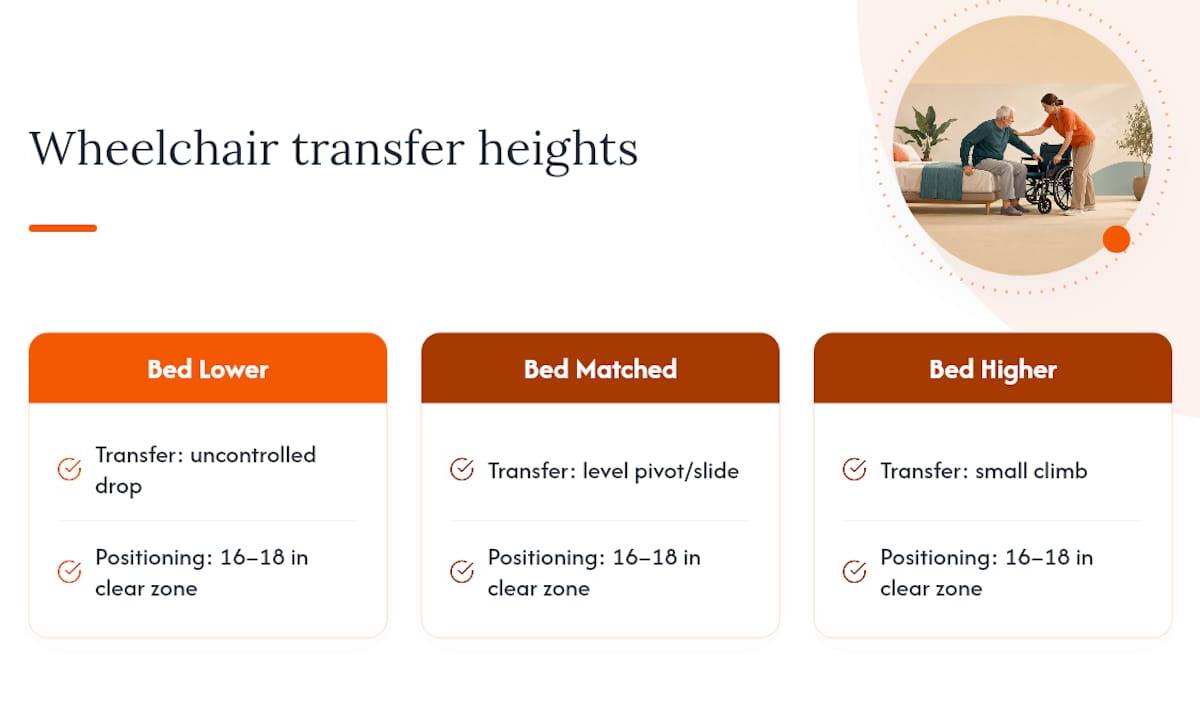
Wheelchair transfers work differently. The safest setup has the bed height matched closely to the wheelchair seat height, ideally within an inch, so the person can pivot or slide across a level surface using a transfer board or their arms, instead of stepping down or hoisting up. A bed that sits noticeably higher than the wheelchair seat turns every transfer into a small climb; noticeably lower, and it becomes an uncontrolled drop. That 16 to 18 inch clear transfer zone in front of the mattress matters even more here, since a wheelchair needs room to position at the right angle before the transfer even starts.
Matching Bed Height to Your Own Body, Not a Chart
The 20 to 24 inch range is a starting point, not a rule. Leg length varies by several inches even among people of the same height, since it depends on proportion, not just total height. Someone 5-foot-4 with proportionally long legs might need a bed closer to 22 inches, while someone 5-foot-8 with a shorter femur relative to their torso might do better at 20.
The seated knee test described earlier is the most reliable way to find this out, because it measures the actual leg, not a population average. Run it again any time weight changes meaningfully, after a joint replacement, or when switching to a different mattress firmness, since a softer mattress compresses more under body weight and effectively lowers the real sitting height by an inch or more compared to a firm one.
Bed Height and Caregiver Transfers
A height that’s ideal for the senior isn’t always ideal for the person helping them. Caregivers assisting with a stand-pivot transfer benefit from a slightly higher bed, since bending less at the caregiver’s own back and knees reduces injury risk over months of repeated transfers. This is one of the few cases where a small compromise, splitting the difference between the senior’s ideal height and a caregiver-friendly height, makes practical sense.
Adjustable bases solve this tension better than a fixed platform, since the caregiver can raise the bed to a comfortable working height for a transfer or a dressing change, then return it to the senior’s ideal resting height afterward. If a caregiver is present daily, that flexibility often justifies the added cost of an adjustable base over a static frame.
What We See Fixing Beds in Real Homes
Most of the calls we get about bed height aren’t complicated once we’re standing in the room. It’s usually one of three things: a box spring adding four unnecessary inches, a frame that’s genuinely too old and rickety to trust with risers, or a path to the bathroom cluttered with furniture nobody thought to move. Swapping a box spring for a low-profile platform, delivering and assembling a new frame, or just clearing a walking path often solves the problem faster than anyone expects.
We recommend calling in help for anything involving stairs, an unusually heavy frame, or a bed frame that already wobbles, since an unstable frame under load is a fall risk of its own. We also flag it when someone’s about to stack risers on an already worn or splintered frame leg. That’s a repair job, not a height fix.
If you’re planning a bigger bedroom reset, our guide on moving help for seniors covers more of what a same-day crew typically handles.
— Mark
Get the Height Right Without Doing the Heavy Lifting
Professional services can handle the physical part of this project so you don’t have to move a mattress alone or guess whether a frame will hold. Homeowners and caregivers call for help swapping out box springs, delivering and assembling low-profile platform frames, and clearing walking paths around a bed the same day, often with transparent, flat-rate pricing quoted beforehand.

If a bed height fix is part of a bigger plan, whether that’s helping a parent downsize into a single-story layout or clearing furniture ahead of a move, our senior downsizing assistance in Southwest Florida covers the furniture side of that transition, from moving pieces out to setting up the new bedroom safely. Book a visit, tell us the target height and what’s currently in the room, and we’ll bring the right tools the first time.
Sources
- Preventing falls: home, room-by-room — National Institute on Aging
- Ada
- Home safety checklist — American Academy of Orthopaedic Surgeons (OrthoInfo)
- Creating a safer patient room environment: The contribution of patient bed height — Clinical study (SAGE)
FAQ
Is 27 Inches Too High for a Senior’s Bed?
For most seniors, yes. Twenty-seven inches sits well above the recommended 20 to 24 inch range and usually leaves feet dangling above the floor, which increases the risk of an unstable landing during a transfer. Very tall individuals with proportionally long legs are the exception, but the seated knee test is the only reliable way to confirm that.
What Is the Best Height-Adjustable Bed for an Elderly Person?
The right adjustable base depends on the person’s specific mobility needs and budget rather than any single model, so a physical therapist’s input on head, foot, and overall height settings matters more than the brand. Adjustable bed frames that let you dial in both the height and the incline tend to serve frequent transfers and caregiver assistance best.
What Type of Bed Is Best for an 80 Year Old?
A bed with a mattress top between 20 and 24 inches, a firm and supportive edge, and clear space on at least one side for a caregiver or walker tends to work best. The exact fit still depends on the individual’s leg length, checked with the seated 90 degree knee test rather than assumed from age alone.
Is a High or Low Bed Better for an Older Adult?
Neither extreme is safe. Research on patient-specific bed height found that low beds were actually the least safe option tested, since standing from a too-low surface demands more leg strength than many seniors have available. A height matched to the person’s own leg length, not a generic “low is safer” assumption, is what actually reduces fall risk.