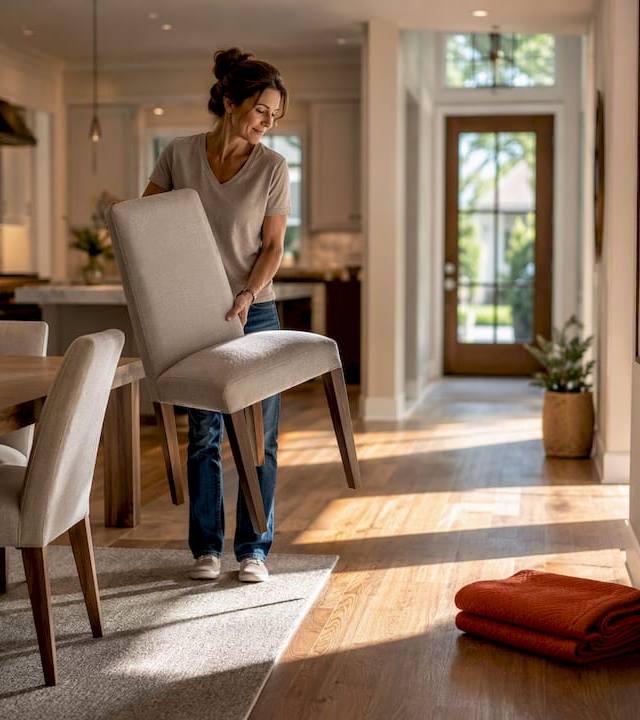
Move Lanai Furniture Before a Storm: Southwest Florida Help From $79

Move Lanai Furniture Before a Storm: Southwest Florida Help From $79
The safest way to move lanai furniture is to disassemble what you can, protect glass and soft goods, and use moving straps or a dolly to carry the rest. Move fragile and upholstered pieces first, get cushions indoors immediately, and leave heavy anchorable items for last. If any piece is oversized, awkward, or requires stairs, hire professional moving help instead of risking an injury or a cracked tabletop.
TL;DR:
- Disassemble removable parts like umbrellas and tabletops, label fasteners, and support fragile items during transport to prevent damage.
- Use appropriate padding such as foam protectors for glass, breathable blankets for wood, and towels for metal to avoid material damage.
- Weigh down outdoor furniture with sandbags or weighted planters before storms, avoiding risky methods like tossing items into pools.
- Book professional moving help for oversized, awkward, or stair-access furniture to prevent injury and property damage.
- Breathable storage containers with silica gel are essential for cushions and small items to prevent mildew during long-term storage.
Table of Contents
- How Do You Assess Lanai Furniture Before Moving It?
- Should You Clean Furniture Before You Move It?
- How Do You Disassemble Lanai Furniture the Right Way?
- How Do You Wrap and Protect Different Furniture Materials?
- What’s the Best Way to Pack Cushions and Small Accessories?
- How Do You Load and Secure Lanai Furniture for Transport?
- How Do You Unpack and Reassemble Lanai Furniture?
- When Should You Move Lanai Furniture Indoors for a Storm?
- What We See in the Field
- How Fix Move Haul Handles Lanai Furniture Moves
- Sources
- FAQ
How Do You Assess Lanai Furniture Before Moving It?
Walk your lanai and sort pieces by material before touching anything. Wood, wicker, and resin handle differently than glass or metal, and each material dictates how much padding and how many hands you need. Glass tabletops and mirrors go first on your priority list because they crack under pressure that wood or resin would shrug off. Wicker frames flex, so they need support underneath during a lift, not just at the edges.

Some furniture is not meant to move at all. Bolted-down umbrellas, built-in seating, or anchored fire pit surrounds should stay put unless you’re prepared to reinstall them, which usually calls for a professional.
Budget your time by piece type:
- Glass tabletops and mirrors: 10 to 15 minutes each, two people minimum.
- Wicker or rattan seating: 5 to 10 minutes per piece, one person if it’s dry and light.
- Metal dining sets: 15 to 20 minutes for disassembly plus transport.
- Wood furniture: 10 minutes per piece; watch for splinters and loose joints.
One item deserves a hard rule: propane tanks. Never bring a propane tank indoors, even temporarily during a move or storm prep. If a tank has been exposed to flooding, don’t handle it yourself. The CDC’s floodwater safety guidance recommends contacting local fire or police instead.
Should You Clean Furniture Before You Move It?
Cleaning before you move lanai furniture isn’t just cosmetic. Trapped grime under a cushion or against a metal frame turns into mildew fast once that piece sits wrapped in a garage or storage unit for a few weeks. A mild soap and water solution handles most outdoor furniture fine. Save the pressure washer for concrete, not for screens or painted frames. High-pressure water tears lanai screening and strips finish off aluminum and wood, so a soft-wash approach protects both the material and the warranty on newer pieces.

Spot-clean cushions with a soft brush and diluted dish soap, then let them air dry completely before packing. Deep stains or mold spotting call for a professional upholstery clean rather than a home fix that might just spread the mildew.
Pro Tip: Set up two zones before you start, one for pieces still dirty and one for anything already cleaned and dry. Mixing the two in a truck or garage undoes the cleaning you just did.
How Do You Disassemble Lanai Furniture the Right Way?
Disassembly saves space and prevents the most common transport damage: cracked tabletops from shifting during transit. Not every piece needs to come apart, but tables with removable legs, umbrellas, and anything held together with visible bolts should.
- Remove umbrellas first. Close them fully, release the pole from the base, and wrap the canopy separately to avoid fabric tears.
- Detach tabletops from bases. Most patio tables use four to six bolts; support the tabletop with your knee or a helper’s hands while you unscrew the last one.
- Take off chair legs or arms if the design allows, especially on stackable or sling chairs.
- Bag and label every fastener. Drop screws, bolts, and washers into a labeled sandwich bag, tape it to the underside of the matching piece, and snap a quick photo of the assembled item before you break it down.
Welded or fixed-frame furniture, like most fire pit tables and built-in bench seating, shouldn’t be disassembled at all. Move those as single units with enough hands to lift evenly, or bring in help for anything over roughly 75 pounds that two people can’t carry comfortably.
How Do You Wrap and Protect Different Furniture Materials?
Every material fails differently in transit, so the wrap has to match the risk. Glass breaks under point pressure, wood swells with trapped moisture, and metal scratches against anything harder than itself.
- Glass: Pad every edge with foam corner protectors, then double-box flat panes or wrap tabletops in moving blankets secured with tape (never directly on the glass). Always transport upright, never flat, and never stacked under other items.
- Wood: Use breathable moving blankets, not sealed plastic. Plastic wrap traps humidity against the surface, and Southwest Florida humidity turns that into mildew within days.
- Metal and powder-coated frames: Wrap with moving blankets or old towels at contact points. Chafing between two metal pieces during a bumpy drive scratches through the coating fast, and once that coating breaks, rust follows.
- Cushions: Store in breathable bins with a little silica gel packets to manage moisture. Skip vacuum-sealed bags for long-term storage. They compress fabric fibers and, worse, trap any residual dampness right against the foam where mold takes hold.
The trapped-moisture problem is the one homeowners underestimate most. A cushion or wood frame that looks dry can still carry enough humidity to grow mildew inside a sealed container within a week in Florida’s climate, especially during the wetter months.
What’s the Best Way to Pack Cushions and Small Accessories?
Breathable bins beat vacuum bags for anything staying packed more than a few days. Vacuum bags save space, but they also seal in whatever moisture the fabric hasn’t fully released, which is exactly how mold starts. If you’re only moving cushions across the yard for a same-day storm prep, vacuum bags are fine. For anything longer, breathable totes with a couple of silica packets are worth the extra bin space.
- Pack fragile decor (lanterns, planters, glass accents) individually in newspaper or bubble wrap inside a labeled box.
- Group hardware bags by furniture piece, not by fastener type, so reassembly doesn’t turn into a matching game.
- Keep one master inventory sheet listing every piece, where its hardware bag is, and which box holds its cushions.
That inventory sheet sounds like overkill until you’re unpacking three weeks later and can’t remember which bin has the dining chair cushions.
How Do You Load and Secure Lanai Furniture for Transport?
Loading order determines whether anything survives the drive intact. Heavy, low-profile pieces go in first and low; upright fragile items go in the middle where they’re less likely to shift; cushions and soft goods go on top, since they can absorb a little jostling that glass or wood can’t.
- Load heavy pieces first, flat against the truck bed or garage floor, distributing weight evenly.
- Stand glass and mirrors upright, wedged between padded surfaces so they can’t tip or slide.
- Stack cushions and lightweight accessories last, on top where they add no pressure to anything below.
- Secure everything with ratchet straps, using edge protectors anywhere the strap crosses a corner or finished surface.
Moving straps make a real difference on anything heavy that two people are carrying by hand. Moving straps reduce back strain and let two people share weight more evenly than a straight lift, but pick straps rated well above the item’s actual weight. A 20 percent safety buffer between the item’s weight and the strap’s rated capacity is a good rule of thumb. On stairs, the person on the lower steps should use a higher loop setting so the load stays level between both carriers, as strap geometry matters more than raw strength on an incline.
Pro Tip: If your move involves stairs, a narrow hallway, or anything you’d need two strong friends and a prayer to get through a doorway, that’s the signal to call in professional help instead of risking a dropped glass tabletop or a thrown-out back.
How Do You Unpack and Reassemble Lanai Furniture?
Reassembly goes fast if you did the labeling right. Start with the largest pieces first, using your photos to match legs, bolts, and tabletops back to the correct frame. Set heavier items in their final spot before tackling smaller accessories, since moving a fully assembled table later is harder than positioning the base first.
- Give wood furniture and cushions a day to acclimate to the new humidity level before doing any final cleaning or sealing.
- Check every reassembled joint for a loose fastener before sitting on or loading weight onto the piece.
- Touch up minor scratches with a matching paint pen or furniture wax; anything structural, like a cracked weld or a split table leg, needs a professional repair rather than a quick fix.
When Should You Move Lanai Furniture Indoors for a Storm?
Storm prep isn’t optional in Southwest Florida, and the timing matters more than most homeowners think. The CDC recommends clearing yards and moving lawn and lanai furniture into secure shelter before high winds arrive, since anything left outside can become a projectile.
With limited time before a storm, triage fast:
- Move the most expensive or fragile pieces indoors first: glass tables, cushions, electronics, decor.
- Stack and secure heavier furniture you can’t fit inside, and weigh down umbrellas with sandbags rather than leaving them upright.
- Never bring propane tanks or gas appliances inside; the CDC’s flood safety guidance is explicit on this point.
- Skip the old trick of throwing furniture in the pool to weigh it down. Pool experts warn it can damage the pool surface and speeds up corrosion on the furniture itself.
Freeing up garage space ahead of hurricane season, using overhead racks where you can, saves a frantic scramble later; for tips on preparing storage spaces and weatherproofing entryways, see How to Winterize Your Doors? | One Day Doors & Closets.
What We See in the Field
Homeowners lose the most time on hardware, not heavy lifting. Skipped photos, mixed-up screws, and thin padding cause more damage than a dropped chair ever does. Pre-mark landing zones, stage your straps before you start, and book half-day help for anything awkward. A short call to a pro often costs less than a cracked tabletop.
— Mark
How Fix Move Haul Handles Lanai Furniture Moves
If disassembling a glass tabletop solo or wrestling a wicker sectional down a narrow lanai staircase sounds like a bad afternoon, that’s exactly the job Fix Move Haul was built for. A local crew can come directly to your door with transparent, upfront pricing, no dispatcher chain, and often same-day availability across Southwest Florida.

The relevant services line up directly with what this article covers. Moving Help & Labor starts at $79 for getting furniture from the lanai to a truck, storage, or a new spot in the house. Furniture Delivery & Pickup starts at $79 when you need pieces picked up from one location and dropped at another. Furniture Assembly & Installation starts at $99 for reassembling anything you disassembled for the move, and Outdoor & Lanai Cleaning starts at $149 if you’d rather have someone else handle the soft-wash cleaning before pieces go back outside.
Ready to skip the sore back? Request a quote through Moving Help & Labor and get a crew scheduled directly with a local owner-operator.
Sources
For safety-critical claims in this guide, go straight to the primary sources. The CDC’s hurricane preparation page covers clearing yards and securing outdoor items before a storm. This Old House’s guide to moving straps breaks down strap types and weight ratings. The UF/IFAS Extension blog on pools and hurricanes explains why using a pool to anchor furniture backfires.
- Floodwater safety guidance | CDC
- Best moving straps | This Old House
- Pools and hurricanes (UF/IFAS Extension blog)
FAQ
What Is the Best Way to Move Large, Heavy Furniture?
Use moving straps or a dolly rather than a straight lift, and always move heavy items with a second person. Moving straps reduce back strain and distribute weight better than carrying by hand, especially on stairs where strap positioning matters more than strength.
How Do You Weigh Down Porch Furniture Before a Storm?
Sandbags or weighted planters anchor umbrellas and light furniture better than any makeshift trick. Avoid tossing furniture into a pool to anchor it, since pool experts warn that approach damages pool surfaces and speeds up rust on the furniture.
What Are the Easiest Ways to Move Heavy Lanai Furniture?
Disassemble what you can, pad the rest, and use straps rated well above the item’s weight. For anything involving stairs, tight corridors, or pieces heavier than two people can safely carry, booking moving help is the easier and safer route.
What Is the Easiest Type of Lanai Furniture to Move?
Lightweight resin or aluminum-frame furniture is easiest since it’s low weight and rarely needs disassembly. Wicker comes close behind, as long as the frame is dry and structurally sound, while glass and solid wood pieces take the most time and care.
How Much Does It Cost to Hire Help Moving Lanai Furniture?
Fixmovehaul’s Moving Help & Labor service starts at $79, with pricing depending on the number of pieces and complexity of the job. Outdoor and lanai cleaning before or after a move starts at $149.