Clean Lanai Screens Algae: A Safe DIY Guide for Homeowners
Clean Lanai Screens Algae: A Safe DIY Guide for Homeowners
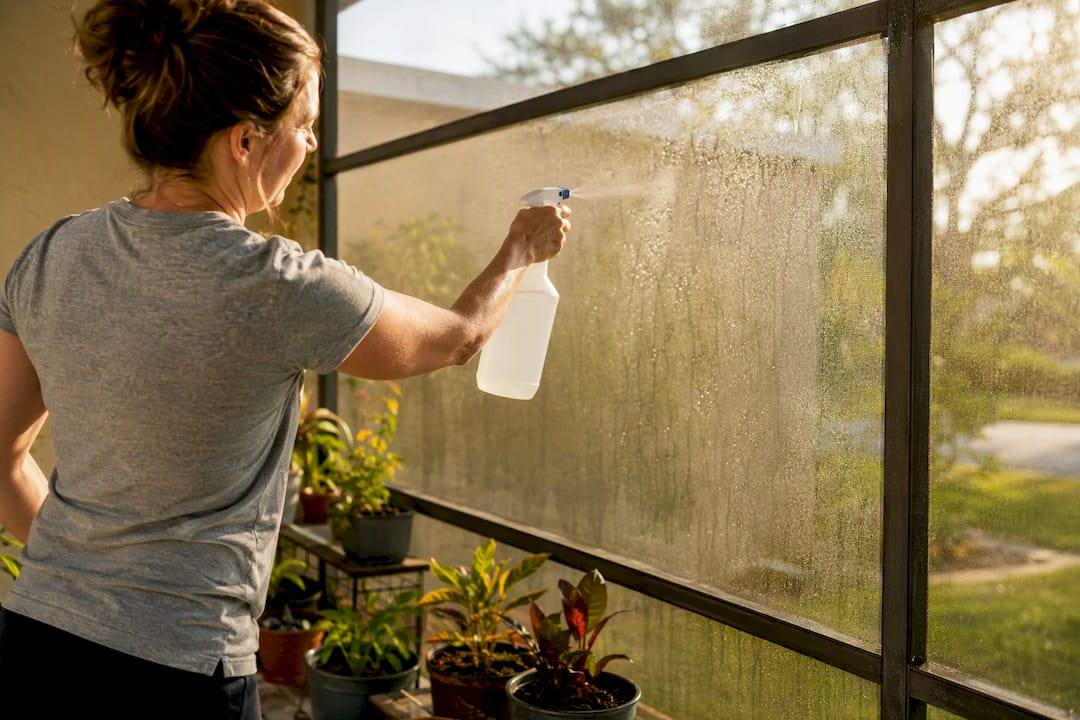
Your best first move to clean lanai screens with algae is a soft-wash approach: a mix of white vinegar and mild dish soap, sprayed on, left to sit, then rinsed off with a low-pressure hose. It kills algae at the root without tearing the mesh the way a pressure washer will.
Here’s the quick version:
- Mix: equal parts white vinegar and water, plus a tablespoon of Dawn or another mild dish soap per half gallon.
- Dwell time: let it sit 10 to 15 minutes on light-to-moderate growth.
- Rinse: low-pressure hose spray only, from top to bottom.
Cover nearby plants, wear gloves and eye protection, and always spot-test a hidden panel first to check for discoloration.
Pro Tip: Spray in the early morning or late afternoon. Direct Florida sun can bake the solution onto the mesh before it has time to work.
Key Takeaways
A vinegar and dish soap soft wash removes light-to-moderate lanai screen algae safely, while heavy growth calls for diluted bleach or a professional soft-wash crew.
| Point | Details |
|---|---|
| Start gentle | Use a 1:1 vinegar and water mix with mild dish soap before reaching for bleach. |
| Dwell time matters | Let cleaning solution sit 10 to 15 minutes so it breaks down algae at the root. |
| Skip the pressure washer | Low-pressure rinsing under roughly 500 PSI protects mesh; standard pressure washers tear it. |
| Clean on a schedule | Inspect and clean every 3 to 6 months, more often in shaded or humid spots. |
| Call in help when needed | Fixmovehaul’s lanai cleaning service handles torn screens, heavy algae, and large enclosures with same-day booking. |
Table of Contents
- Household Cleaners vs. Commercial Options for Lanai Algae
- How Do You Clean Lanai Screens With Algae Using Vinegar and Soap?
- When Should You Use Bleach on Lanai Screens?
- What Tools Avoid Damaging Lanai Screen Mesh?
- How Often Should You Clean Lanai Screens to Prevent Algae?
- When Should You Call a Professional Lanai Cleaner?
- Skip the Scrubbing: Book a Lanai Cleaning Instead
- Frequently Asked Questions
- Sources
Household Cleaners vs. Commercial Options for Lanai Algae
Not every screen needs the same treatment. Light green film calls for a gentler approach than black cyanobacteria streaks baked in by a Florida summer.
Household options work for most routine jobs:
- White vinegar (1:1 with water): breaks down algae’s cell structure, cheap, safe for mesh and aluminum frames, but slower on heavy buildup.
- Dawn or mild dish soap (1 tablespoon per ½ gallon water): cuts through grime and pollen film, gentle on hands and plants, best paired with vinegar for stubborn spots.
- Baking soda paste: useful for localized dark spots, but requires more scrubbing.
Diluted household bleach handles heavy, established algae or visible mildew, but it carries real risk to plants, pool equipment, and frame finishes if used carelessly.
Wet & Forget, a no-rinse commercial spray, is not a rescue treatment for heavy growth. It works best as a preventive maintenance product applied to already-clean screens on a seasonal schedule.
For effort and cost, vinegar wins hands down. For speed on heavy jobs, bleach wins, with tradeoffs.
How Do You Clean Lanai Screens With Algae Using Vinegar and Soap?
This is the method to try first on any lanai showing light green film, pollen buildup, or general dinginess.
Before you start: clear furniture and rugs off the lanai floor, cover nearby plants and pool equipment with plastic sheeting, and put on gloves and safety glasses. Spot-test your mix on a small, hidden panel section and wait five minutes to confirm no discoloration or mesh damage.
What you need: a spray bottle or pump sprayer, a soft-bristle brush, a garden hose with a fan or shower nozzle (never a pressure washer nozzle), and your vinegar-soap solution.
Here’s the sequence:
- Mix your solution. Combine equal parts white vinegar and water in your sprayer. Add one tablespoon of Dawn per half gallon of water in a second bottle for tougher spots.
- Spray the screens evenly, working top to bottom so runoff carries dirt downward instead of re-soiling clean sections.
- Let it dwell for 10 to 15 minutes. This is the step people rush, and it is the one that does the actual work. The chemistry needs time to break down algae at the root instead of just wiping the surface.
- Scrub gently only where needed. Use the soft-bristle brush in light, circular motions. If algae lifts easily, skip this step entirely to avoid stretching the mesh.
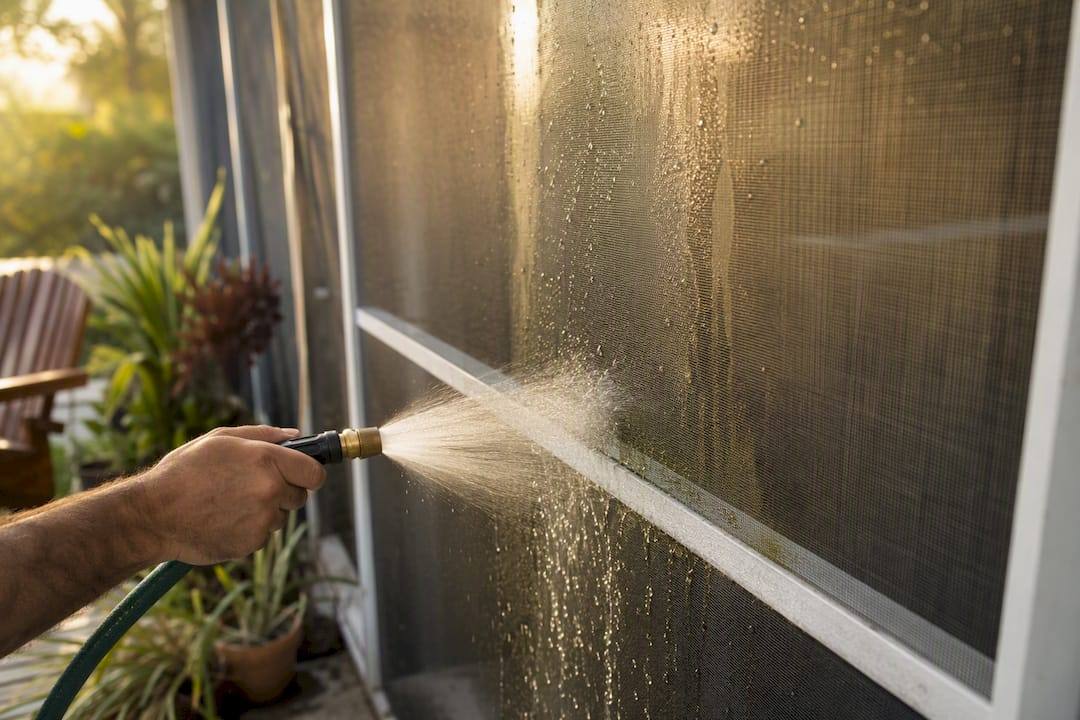
- Rinse with low water pressure, holding the nozzle a foot or two away, moving in the same top-to-bottom pattern.
- Let the screens air-dry, then inspect for missed spots, small tears, or loose frame corners.
A single panel takes about 5 to 10 minutes; a full pool cage enclosure typically runs 2 to 4 hours depending on size. If you spot tears, sagging mesh, or algae that returns within weeks, stop and consider a professional soft wash instead of repeating the DIY cycle.
Pro Tip: Work in sections and rinse each one before moving on. Vinegar solution that dries on the mesh in Florida heat is harder to remove on your second pass.
When Should You Use Bleach on Lanai Screens?
Reach for diluted bleach only when vinegar and soap have failed, or when you’re facing heavy black algae, visible mildew colonies, or algae that keeps regrowing within a month of cleaning.
Mix a safe dilution: roughly 1 part household bleach (sodium hypochlorite) to 9 parts water. Getting this ratio wrong is the most common mistake, since stronger mixes don’t clean faster, they just degrade frame finishes and mesh fibers faster.
- Cover all nearby plants, pool equipment, and outdoor furniture with plastic sheeting.
- Put on rubber gloves, eye protection, and a mask if working in a low-ventilation space.
- Apply the diluted bleach solution with a pump sprayer, working in small sections.
- Let it sit no more than 5 to 10 minutes. Extended contact time is what damages aluminum frames.
- Rinse thoroughly with low-pressure water, and rinse a second time to neutralize any residue.
Never mix bleach with ammonia or vinegar. The combination releases toxic fumes. Keep runoff away from pools, gardens, and storm drains where possible; bleach-heavy runoff can harm nearby vegetation and waterways.
Pro Tip: Test bleach on one hidden panel and check it after 24 hours. Some older or sun-worn screens discolor even at low dilutions.
What Tools Avoid Damaging Lanai Screen Mesh?
The tools matter as much as the cleaner. A pressure washer is the single fastest way to ruin a screen enclosure, since standard nozzle pressure easily tears mesh that a soft-bristle brush and garden hose handle safely.
- Soft-bristle brush or microfiber cloth for spot scrubbing without abrasion.
- Pump sprayer or spray bottle for even solution coverage.
- Garden hose with a fan nozzle, kept under roughly 500 PSI equivalent pressure, held at least a foot from the mesh.
- Avoid power washers entirely on screen mesh, even on the lowest setting.
Before cleaning, run your hand lightly along a seam to check for brittleness or sun damage. Screens that feel stiff or crack easily need gentler handling or professional attention.
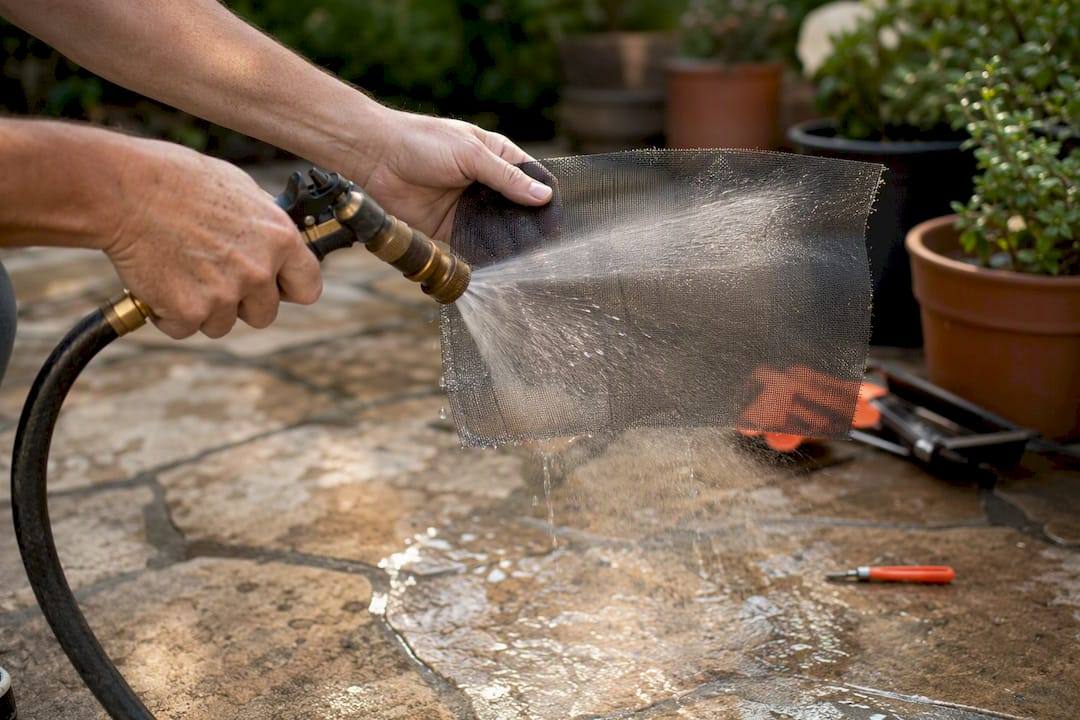
Pro Tip: Test your hose pressure on a scrap piece of screen material or an inconspicuous corner before working across the whole enclosure.
How Often Should You Clean Lanai Screens to Prevent Algae?
Most Florida homes need a full cleaning every 3 to 6 months, with shadier, humid lots needing checks closer to the 3 month mark since algae embeds faster in low-airflow, high-moisture conditions.
A few environmental fixes slow regrowth more than any cleaner:
- Trim overhanging trees and shrubs to cut shade and improve airflow across the screens.
- Fix sprinkler heads that overspray onto the lanai, since standing moisture feeds algae growth.
- Clear gutters and downspouts near the enclosure to stop runoff from pooling against the frame.
- Apply a preventive spray like Wet & Forget after a full cleaning to extend the gap before algae returns.
- Inspect after every heavy rain season, since Florida’s wet months accelerate growth dramatically.
When Should You Call a Professional Lanai Cleaner?
DIY works well for routine maintenance, but some jobs call for a soft-wash crew. Torn or sagging panels, heavy black cyanobacteria staining, algae that returns within weeks of cleaning, or a large enclosure that would take a full weekend to tackle solo are all signs to call in help.
Professional soft-wash services typically apply a biodegradable solution at low pressure with a proper dwell time, then rinse and inspect the entire enclosure, including frames and the lanai floor, in a single visit. Many document panel condition before and after the job, which matters if you’re prepping a property for sale or dealing with insurance questions.
A soft wash under roughly 500 PSI with the right dwell time kills algae and mold without the tearing risk that comes with standard pressure washing.
Fixmovehaul handles outdoor and lanai cleaning across Southwest Florida, with same-day availability for homeowners who would rather skip the weekend scrubbing session.
A Local Perspective on Algae and Lanai Screens
Working across Southwest Florida properties, the pattern is consistent: homeowners who soft-wash first, before reaching for bleach or a pressure washer, get more years out of their screens. Watch humid stretches after summer storms closely.
Skip the Scrubbing: Book a Lanai Cleaning Instead
If a full weekend of spraying, scrubbing, and rinsing doesn’t fit your schedule, or your screens already show tears or heavy staining, Fixmovehaul handles the whole job for you across Naples, Bonita Springs, Estero, and the rest of Southwest Florida.

Our outdoor and lanai cleaning service covers:
- Screen mesh, frames, and the lanai floor in one visit.
- Plant and pool equipment protection during application.
- Same-day booking for large enclosures or urgent pre-sale cleanups.
Need cleaning supplies delivered first? Our Home Depot and Lowe’s pickup service can grab vinegar, mild dish soap, or bleach and drop them at your door before your appointment. Ready to skip the ladder and the scrubbing? Book your lanai cleaning and get your screens back to clear.
Frequently Asked Questions
What is the best way to clean pollen off a lanai screen? A quick rinse with a garden hose on low pressure removes most pollen. For sticky or heavy buildup, add the vinegar and dish soap mix and let it dwell 5 to 10 minutes before rinsing.
Can I use bleach on aluminum lanai frames without damage? Diluted bleach at 1 part bleach to 9 parts water is generally safe for short contact, but prolonged exposure can dull or corrode aluminum finishes. Rinse thoroughly and avoid letting the solution sit longer than 10 minutes.
How do I tell algae apart from mold or mildew on my screens? Algae usually appears as green or black slimy film that streaks downward with water flow, while mold and mildew tend to look powdery or fuzzy and cling to shaded, damp corners. Both respond to the same vinegar-based cleaning approach.
What does professional lanai screen cleaning typically cost? Pricing varies by enclosure size, screen condition, and region, so it’s worth requesting a quote based on your specific property rather than assuming a flat rate.
Where should I store patio furniture during hurricane season? Move lightweight furniture indoors or into a garage before a storm, and secure heavier pieces with straps anchored to the ground or lanai frame if they can’t be relocated.
Sources
- How to Clean a Lanai Pool Enclosure
- Lanai Screen Cleaning in Florida: The Complete 2026 Guide to Protecting Your Outdoor Oasis
- Damage-Free Pool Screen Cleaning in Hillsborough & Manatee Counties FL | Premier Pro Wash & Seal